Finding quality healthcare starts with locating a reliable primary care provider in your community. When you search for a "pcp office near me," you're taking the first step toward establishing a long-term healthcare relationship that can significantly impact your overall wellness and quality of life. Understanding what makes an exceptional primary care practice, what services you should expect, and how to evaluate different options will help you make an informed decision that serves your health needs for years to come.
Understanding Primary Care and Its Critical Role
Primary care serves as the foundation of the American healthcare system, providing comprehensive medical services that address the majority of health concerns throughout your lifetime. A primary care physician (PCP) acts as your healthcare quarterback, coordinating all aspects of your medical care from routine checkups to specialist referrals.
What Primary Care Physicians Actually Do
Primary care providers offer far more than just treating colds and prescribing medications. These medical professionals become familiar with your complete health history, family medical background, lifestyle factors, and personal health goals. According to Cleveland Clinic’s guide on primary care teams, having a dedicated primary care provider leads to better health outcomes through preventive care and coordinated treatment approaches.
Core responsibilities of your PCP include:
- Annual physical examinations and wellness visits
- Preventive care and health screenings
- Management of chronic conditions like diabetes, hypertension, and asthma
- Acute illness treatment for infections, injuries, and sudden symptoms
- Medication management and prescription refills
- Referrals to specialists when advanced care is needed
- Health education and lifestyle counseling
Your primary care relationship extends beyond individual appointments. These physicians maintain comprehensive records of your medical history, track changes over time, and identify potential health risks before they become serious problems.

Evaluating a PCP Office Near Me: Key Factors
When searching for a pcp office near me, several important considerations should guide your decision-making process. Not all primary care practices operate the same way, and finding the right fit requires careful evaluation of multiple factors.
Location and Accessibility Considerations
Geographic proximity matters significantly when choosing a primary care provider. A conveniently located office increases the likelihood that you'll attend regular appointments and seek care when health concerns arise.
Important accessibility factors:
- Distance from your home or workplace – Ideally within 10-15 minutes during normal traffic conditions
- Public transportation access – Essential if you don't drive regularly
- Parking availability – Free, plentiful parking reduces stress and time constraints
- Office hours – Extended hours, evening appointments, or weekend availability
- Same-day appointment availability – Critical for urgent health concerns
Many modern practices now offer telehealth options, expanding access beyond traditional in-person visits. However, certain medical situations require physical examinations, lab work, or procedures that can only be performed in person.
Services and Capabilities Assessment
The range of services available at a primary care office directly impacts your convenience and quality of care. Comprehensive facilities reduce the need for multiple appointments at different locations across town.
| Service Type | Why It Matters | Questions to Ask |
|---|---|---|
| Laboratory Services | Immediate blood work and diagnostic testing | Are labs processed on-site or sent out? |
| Imaging Capabilities | X-rays, ultrasounds without separate appointments | What imaging services are available in-house? |
| Subspecialty Support | Direct access to cardiologists, endocrinologists, etc. | Which specialists are available through your practice? |
| Chronic Disease Management | Coordinated care for ongoing conditions | What programs exist for diabetes, heart disease, etc.? |
| Preventive Care Programs | Proactive health maintenance | What wellness and screening programs do you offer? |
Practices with in-house ancillary services streamline your healthcare experience, eliminating the hassle of coordinating multiple appointments at different facilities. This integrated approach proves particularly valuable for patients managing chronic conditions or those requiring frequent monitoring.
Insurance Coverage and Payment Options
Financial considerations significantly influence healthcare accessibility. Before committing to a primary care provider, verify that they accept your insurance plan and understand their payment policies.
Financial factors to investigate:
- Insurance networks and accepted plans
- Copayment amounts for different visit types
- Out-of-pocket costs for uninsured services
- Payment plan availability for larger bills
- Alternative payment models like Direct Primary Care
Healthline’s guide to choosing a primary care physician emphasizes checking in-network status early in your search process. Out-of-network care can result in substantially higher costs, even with insurance coverage.
Some practices have adopted innovative payment structures. Direct Primary Care models, for instance, charge monthly membership fees in exchange for unlimited access to primary care services, though these arrangements don't work for everyone.

What to Expect During Your First Visit
Once you've identified a promising pcp office near me, scheduling an initial appointment allows you to assess whether the practice meets your expectations. First impressions matter, and this visit provides valuable insights into the quality of care you can expect.
Office Environment and Staff Interactions
The moment you walk through the door, observe the office atmosphere and how staff members interact with patients. Professional, courteous, and efficient front desk personnel indicate a well-managed practice that values patient experience.
Positive indicators include:
- Clean, well-maintained waiting areas
- Minimal wait times or clear communication about delays
- Friendly, helpful administrative staff
- Organized check-in processes
- Respect for patient privacy during registration
Reception staff set the tone for your entire healthcare experience. Practices that invest in training their front-line employees typically demonstrate higher overall quality standards throughout their operations.
Physician Communication Style
The relationship between you and your primary care physician depends heavily on effective communication. During your first appointment, assess whether the doctor listens attentively, explains concepts clearly, and respects your questions and concerns.
- Does the physician make eye contact and engage directly with you?
- Are explanations provided in understandable language, avoiding excessive medical jargon?
- Does the doctor ask about your health goals and lifestyle factors?
- Is there adequate time for questions without feeling rushed?
- Do you feel comfortable discussing sensitive health topics?
Research consistently shows that patients who communicate well with their physicians experience better health outcomes, higher satisfaction, and improved adherence to treatment recommendations. If something feels off during your initial interaction, trust your instincts.
Services That Distinguish Exceptional Primary Care Practices
When comparing different options after searching for a pcp office near me, certain service offerings separate outstanding practices from average ones. These differentiators often correlate with better patient outcomes and more convenient healthcare experiences.
Same-Day Appointment Availability
Health concerns don't always arise conveniently during regular business hours or with advance notice. Practices offering same-day appointments for urgent needs demonstrate commitment to accessible, responsive care.
Benefits of same-day availability:
- Reduced emergency room visits for non-critical issues
- Faster treatment when symptoms first appear
- Lower overall healthcare costs
- Decreased anxiety about accessing care
- Continuity with your established physician
Many patients end up in urgent care centers or emergency departments simply because they can't get timely appointments with their regular doctors. Practices that prioritize same-day scheduling keep you within your established care network where providers already know your medical history.
Comprehensive Age-Appropriate Care
Family-focused primary care practices serve patients across all life stages, from pediatric care through senior health management. This comprehensive approach allows entire families to receive care under one roof, simplifying healthcare coordination.
| Age Group | Primary Care Focus Areas | Key Services |
|---|---|---|
| Children (0-12) | Growth monitoring, vaccinations, developmental milestones | Well-child visits, immunizations, school physicals |
| Adolescents (13-18) | Preventive health, mental wellness, sports participation | Sports physicals, acne treatment, mental health screening |
| Adults (19-64) | Chronic disease prevention, health maintenance | Annual physicals, cardiovascular screening, diabetes prevention |
| Seniors (65+) | Chronic disease management, mobility, cognitive health | Medicare wellness visits, fall prevention, memory screening |
Practices capable of treating all ages build lasting relationships with families, understanding health patterns and genetic predispositions that span generations. This longitudinal perspective enhances diagnostic accuracy and preventive care strategies.
Integrated Ancillary Services
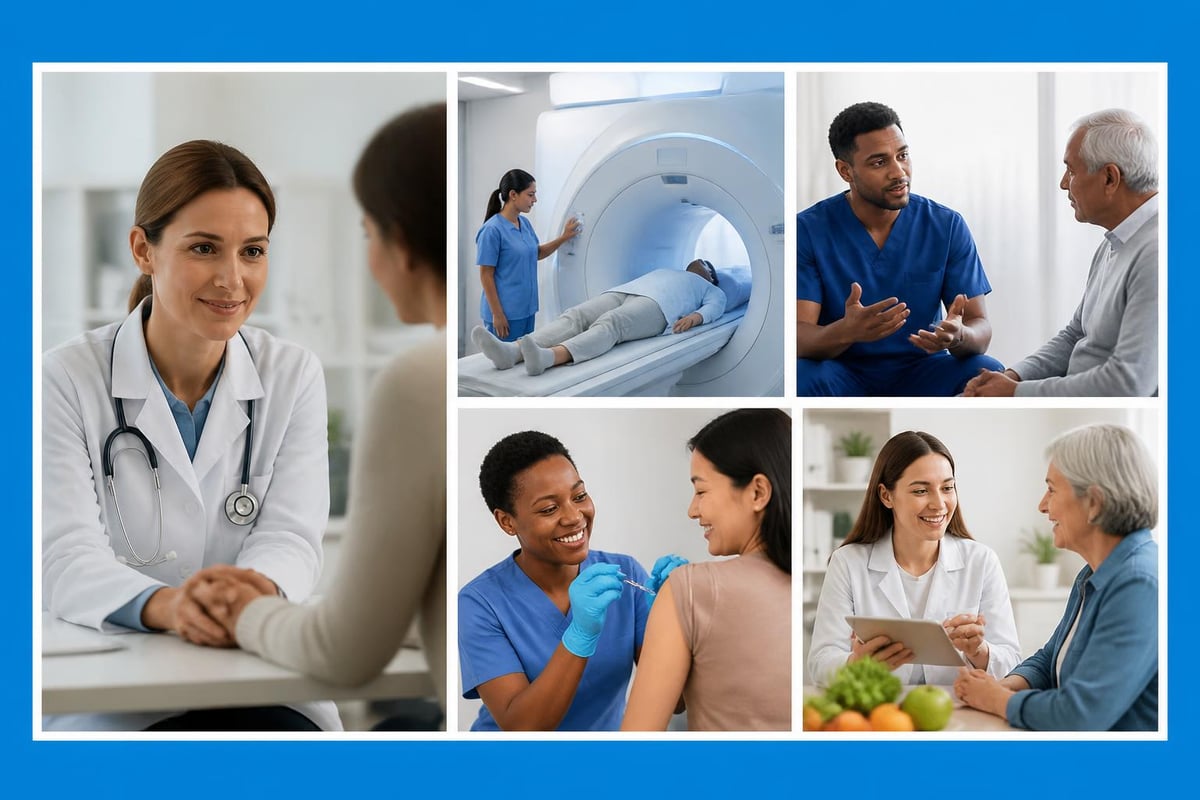
Modern primary care increasingly incorporates ancillary services directly into the practice setting. This integration eliminates referrals to external facilities for routine diagnostic testing and minor procedures.
Valuable in-house services include:
- Phlebotomy and laboratory testing
- Electrocardiograms (EKG)
- Basic X-ray capabilities
- Point-of-care testing for rapid results
- Minor surgical procedures
- Physical therapy referrals or services
When your primary care office can perform lab work, imaging, and other diagnostic tests on-site, results reach your physician faster, enabling quicker diagnosis and treatment. You also avoid the inconvenience of traveling to multiple locations for follow-up testing.
Building a Long-Term Healthcare Partnership
Selecting a pcp office near me represents the beginning of an ongoing healthcare relationship rather than a single transaction. The most significant health benefits emerge when patients maintain consistent primary care relationships over many years.
Continuity of Care Advantages
Seeing the same physician or practice consistently creates comprehensive medical records that reveal patterns, track chronic conditions, and identify subtle changes that might otherwise go unnoticed.
Long-term relationship benefits:
- Your doctor knows your complete medical history without relying solely on records
- Baseline measurements exist for comparison when abnormalities arise
- Trust develops, making difficult health conversations easier
- Medication interactions are tracked across multiple prescriptions
- Family health patterns inform preventive recommendations
Studies demonstrate that patients with established primary care relationships experience fewer hospitalizations, better chronic disease control, and lower healthcare costs compared to those who seek episodic care from various providers.
Subspecialty Coordination and Support
Complex health conditions often require specialist involvement, but your primary care physician should remain the central coordinator of your overall care. Practices with strong subspecialty support streamline referrals and maintain communication across different providers.
Quality primary care offices maintain relationships with trusted specialists in cardiology, endocrinology, orthopedics, dermatology, and other fields. When referrals become necessary, these established connections facilitate faster appointments and more effective information sharing.
Your PCP interprets specialist recommendations within the context of your complete health picture, ensuring that treatments for one condition don't adversely affect other aspects of your health. This coordination proves especially critical for patients managing multiple chronic conditions simultaneously.
Technology and Patient Experience Enhancements
Modern healthcare increasingly relies on technology to improve access, communication, and convenience. When evaluating a pcp office near me, consider how the practice leverages technology to enhance your healthcare experience.
Patient Portal Capabilities
Comprehensive patient portals provide 24/7 access to your medical information, test results, and communication tools. Healthline’s FindCare tool helps patients locate primary care providers offering convenient online services and appointment booking.
Essential portal features:
- Secure messaging with your healthcare team
- Lab and test result access with provider explanations
- Prescription refill requests
- Appointment scheduling and reminders
- Medical record downloads for your personal files
- Bill payment and insurance information
Patient portals reduce phone tag with office staff, provide faster access to routine information, and help you take a more active role in managing your healthcare.
Telehealth Integration
The expansion of telehealth services during recent years has permanently changed how many primary care visits occur. Video consultations work well for medication management, minor illness evaluation, mental health support, and chronic disease monitoring.
However, telehealth cannot replace all in-person care. Physical examinations, procedures, vaccinations, and certain diagnostic tests require traditional office visits. The best practices offer flexible options, allowing you to choose the most appropriate visit format for each situation.
Making Your Final Decision
After researching options, visiting facilities, and evaluating various factors, you'll need to make a final decision about your primary care home. This choice significantly impacts your health trajectory, so take time to weigh all relevant considerations.
Creating Your Personal Evaluation Checklist
Develop a systematic comparison framework that reflects your unique priorities and circumstances. Not everyone values the same factors equally, and your individual health needs should guide your decision.
| Evaluation Category | Weight (1-10) | Office A Score | Office B Score | Office C Score |
|---|---|---|---|---|
| Location/Accessibility | ___ | ___ | ___ | ___ |
| Insurance Acceptance | ___ | ___ | ___ | ___ |
| Same-Day Availability | ___ | ___ | ___ | ___ |
| In-House Services | ___ | ___ | ___ | ___ |
| Communication Style | ___ | ___ | ___ | ___ |
| Office Environment | ___ | ___ | ___ | ___ |
| Technology/Portals | ___ | ___ | ___ | ___ |
Assign importance weights to each category based on your personal needs, then score each practice you're considering. This structured approach removes some of the emotion from the decision and highlights objective differences between options.
Trusting Your Instincts
While data and checklists provide valuable guidance, don't underestimate the importance of your gut feeling about a practice. If something feels off during your interactions, even if you can't articulate exactly what bothers you, that intuition deserves consideration.
Healthcare involves discussing intimate details about your body, lifestyle, and concerns. You need to feel comfortable being completely honest with your medical team. If you sense judgment, dismissiveness, or lack of genuine concern, keep looking for a practice where you feel truly welcomed and valued.
Questions to Ask Before Committing
Before formally establishing care with a new primary care office, asking specific questions helps clarify expectations and avoid future frustrations.
Critical questions include:
- What is the typical wait time for routine appointments versus urgent needs?
- How does the practice handle after-hours emergencies or urgent questions?
- Which hospitals are you affiliated with if admission becomes necessary?
- How are prescription refills managed between appointments?
- What happens if my regular physician is unavailable when I need care?
- How do you coordinate with specialists when referrals are needed?
- What preventive care programs do you offer for my age group and risk factors?
The quality of responses to these questions reveals much about practice operations and patient care philosophy. Vague or evasive answers suggest potential communication problems down the road.
Red Flags to Watch For
Certain warning signs should prompt you to continue your search for a pcp office near me rather than settling for a suboptimal practice.
Concerning indicators:
- Consistently long wait times without apology or explanation
- Difficulty reaching the office by phone
- Rushed appointments where you feel unheard
- Resistance to second opinions or specialist referrals
- Frequent provider turnover within the practice
- Unclear or confusing billing practices
- Outdated facilities or equipment
While no practice will be perfect, patterns of these issues suggest systemic problems that likely won't improve over time. Your health deserves better than accepting inadequate care simply because a location is convenient.
The Value of Primary Care in Preventive Health
Beyond treating illness, exceptional primary care emphasizes prevention and early detection. This proactive approach reduces your lifetime healthcare costs and improves your quality of life across all your years.
Comprehensive Health Screenings
Age-appropriate preventive screenings detect conditions in early stages when treatment is most effective and least invasive. Your primary care physician tracks which screenings you need based on your age, gender, family history, and personal risk factors.
Common preventive screenings:
- Blood pressure monitoring for cardiovascular health
- Cholesterol and lipid panels to assess heart disease risk
- Diabetes screening through blood glucose or A1C testing
- Cancer screenings (mammograms, colonoscopies, skin checks, prostate exams)
- Bone density scans for osteoporosis risk
- Vision and hearing assessments
- Mental health and depression screening
Many serious conditions develop gradually without obvious symptoms. Regular screenings catch these problems before they cause permanent damage or become life-threatening.
Vaccination and Immunization Programs
Vaccines prevent numerous infectious diseases that once caused widespread illness and death. Your primary care office maintains your immunization records and ensures you receive age-appropriate vaccines on recommended schedules.
Adult vaccination needs often surprise people who assume immunizations ended with childhood. Influenza vaccines, pneumonia prevention, shingles protection, and tetanus boosters all form part of comprehensive adult preventive care.
Choosing the right primary care provider creates the foundation for lifelong health and wellness. The search for a quality pcp office near me requires evaluating location, services, communication, and overall practice philosophy. When you find a practice that offers comprehensive care for all ages, same-day appointment availability, in-house ancillary services, and subspecialty support, you've discovered a healthcare partner that can serve your needs through every life stage. Dominion health provides exactly this type of integrated, patient-centered primary care, making quality healthcare accessible when you need it most.