Healthcare can feel overwhelming when you're managing the needs of multiple family members across different age groups. A family medical clinic offers a streamlined solution by providing comprehensive care for patients of all ages under one roof. These clinics serve as the foundation of preventive health and ongoing medical management, creating a healthcare home where your entire family can receive consistent, personalized attention from providers who understand your complete medical history.
Understanding the Role of a Family Medical Clinic
A family medical clinic functions as the primary point of contact for all your healthcare needs. Unlike specialized practices that focus on specific conditions or age groups, these clinics treat patients from infancy through senior years, addressing everything from routine checkups to chronic disease management.
The breadth of services available at a family medical clinic makes it an invaluable resource for busy families. These facilities typically offer preventive care, acute illness treatment, chronic condition management, health screenings, immunizations, and minor procedures. Many modern clinics have expanded their offerings to include ancillary services such as laboratory testing, imaging, and even subspecialty consultations.
Comprehensive Services Under One Roof
The integration of multiple healthcare services creates significant advantages for patients. When your family medical clinic offers in-house laboratory work, you can receive blood test results faster than facilities that outsource these services. Similarly, having imaging capabilities on-site eliminates the need for separate appointments at different locations.
Key services typically available include:
- Annual physical examinations and wellness visits
- Immunizations for children and adults
- Management of chronic conditions like diabetes, hypertension, and asthma
- Acute care for injuries, infections, and sudden illnesses
- Women's health services including prenatal care
- Pediatric care from infancy through adolescence
- Geriatric medicine for aging family members
- Mental health screening and basic counseling
The Family Health Care model demonstrates how comprehensive medical services can be delivered effectively within a primary care setting, ensuring families receive coordinated care across all age groups.

The Importance of Continuity in Family Healthcare
Continuity of care represents one of the most valuable aspects of establishing a relationship with a family medical clinic. When your healthcare provider knows your medical history, family health patterns, and personal health goals, they can deliver more personalized and effective treatment.
This ongoing relationship allows providers to detect subtle changes in your health status that might go unnoticed in episodic care settings. A physician who has treated you for years can recognize when something is "off" even if lab values appear normal. This clinical intuition, built through sustained patient-provider relationships, often leads to earlier disease detection and better outcomes.
Building Trust Across Generations
Families benefit tremendously when multiple generations receive care at the same clinic. Providers gain insight into hereditary health risks, enabling proactive screening and preventive measures for younger family members. A family medical clinic that treats both your elderly parent with heart disease and your young adult child can implement early cardiovascular screening and lifestyle interventions.
The trust built over time creates an environment where patients feel comfortable discussing sensitive health concerns. Research on family medicine innovations shows that strong patient-provider relationships improve medication adherence, increase preventive care utilization, and enhance overall patient satisfaction.
Same-Day Access and Acute Care
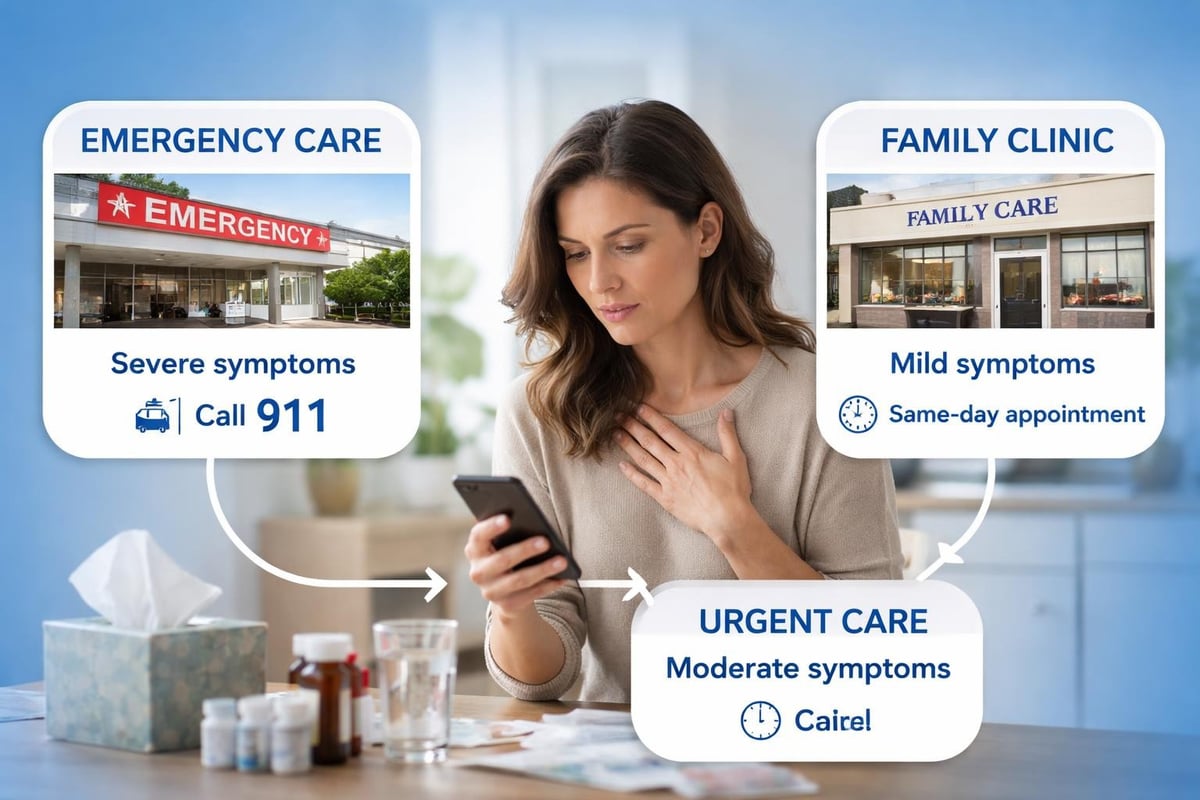
One significant advantage of choosing a family medical clinic for your healthcare needs is the availability of same-day appointments. When illness or injury strikes, waiting days or weeks for an appointment isn't practical. Clinics that offer same-day access provide an alternative to urgent care centers or emergency rooms for non-life-threatening conditions.
Common conditions treated during same-day visits:
- Respiratory infections including strep throat and bronchitis
- Urinary tract infections
- Minor injuries like sprains and lacerations
- Skin conditions and rashes
- Gastrointestinal issues
- Allergic reactions
- Back pain and musculoskeletal complaints
Same-day availability means your established provider can treat acute problems while considering your complete medical history, current medications, and long-term health goals. This comprehensive approach reduces the risk of drug interactions and ensures continuity in your care plan.
Reducing Emergency Department Burden
The availability of same-day appointments at your family medical clinic plays a crucial role in reducing unnecessary emergency department visits. Many conditions that send people to the ER can be effectively managed in a primary care setting with appropriate access.
Emergency departments become overwhelmed with non-emergent cases, leading to long wait times and higher healthcare costs. By offering flexible scheduling and acute care services, family clinics help patients receive timely care in the most appropriate setting.
Preventive Care and Health Maintenance
Prevention forms the cornerstone of family medicine practice. A family medical clinic emphasizes keeping patients healthy rather than solely treating illness. This proactive approach includes regular screenings, immunizations, lifestyle counseling, and risk factor management.
The preventive care schedule varies by age and individual risk factors. Children require frequent well-child visits to monitor development and maintain vaccination schedules. Adults need periodic health screenings for conditions like high blood pressure, high cholesterol, diabetes, and certain cancers. Seniors benefit from additional screenings for osteoporosis, cognitive decline, and fall risk.
| Age Group | Key Preventive Services | Typical Frequency |
|---|---|---|
| Children (0-18) | Well-child visits, immunizations, developmental screening | Annual or more frequent |
| Young Adults (18-39) | Blood pressure screening, depression screening, STI testing | Every 1-3 years |
| Middle-Aged Adults (40-64) | Cholesterol screening, diabetes screening, cancer screenings | Every 1-2 years |
| Seniors (65+) | Comprehensive geriatric assessment, bone density, fall prevention | Annually |
Customized Health Plans
Your family medical clinic develops individualized preventive care plans based on your personal and family health history. If you have a family history of colon cancer, your provider might recommend earlier screening than standard guidelines suggest. Similarly, patients with multiple risk factors for heart disease receive more aggressive cholesterol management.
The Family Care Network emphasizes the importance of patient-centered care in developing these customized health strategies, ensuring that preventive recommendations align with individual patient values and circumstances.
Chronic Disease Management
Managing chronic conditions effectively requires consistent monitoring, medication adjustments, and lifestyle interventions. A family medical clinic provides the ongoing support necessary for successful disease management. Conditions like diabetes, hypertension, asthma, and arthritis require regular follow-up appointments to prevent complications.
The coordination available through a family medical clinic proves especially valuable for patients managing multiple chronic conditions. Your provider can ensure medications for different conditions don't interact negatively and can adjust treatment plans when one condition affects another.
Technology-Enabled Care
Modern family medicine practices increasingly leverage technology to improve chronic disease management. Electronic Health Records (EHR) implementation enables better tracking of health metrics over time, automated reminders for preventive services, and improved communication between patients and providers.
Patient portals allow you to check lab results, request prescription refills, and communicate with your healthcare team between visits. Remote monitoring tools help providers track blood pressure, blood glucose, and other vital signs without requiring frequent office visits.
Benefits of technology integration include:
- Real-time access to medical records and test results
- Secure messaging with healthcare providers
- Automated appointment reminders
- Electronic prescription management
- Telemedicine options for convenient consultations
Subspecialty Support Within Primary Care
While a family medical clinic handles the vast majority of healthcare needs, some conditions require subspecialist expertise. Progressive clinics offer integrated subspecialty support, either through on-site specialists or coordinated referral networks.
This integrated approach ensures that when you need to see a cardiologist, orthopedist, or other specialist, your primary care provider remains involved in coordinating your care. The subspecialist receives your complete medical history and shares findings and recommendations with your primary care team.
Coordinated Care Teams
The most effective family medical clinic models employ care coordination to manage complex cases. When patients require multiple specialists, a care coordinator ensures all providers communicate effectively, preventing duplicate testing and conflicting treatment plans.
For elderly patients or those with serious chronic conditions, this coordination becomes particularly important. Care teams might include your primary care physician, specialists, nurses, pharmacists, and social workers, all working together to optimize your health outcomes.

Choosing the Right Family Medical Clinic
Selecting a family medical clinic requires careful consideration of several factors. Location and accessibility matter greatly when you're dealing with sick children or elderly parents. Extended hours and weekend availability provide flexibility for working families.
The range of services offered should match your family's needs. If you have young children, ensure the clinic provides comprehensive pediatric care. For families with aging parents, geriatric services and care coordination become essential.
Important selection criteria:
- Provider qualifications and experience
- Range of on-site services and testing capabilities
- Availability of same-day appointments
- Office hours and location convenience
- Insurance acceptance and billing practices
- Patient reviews and satisfaction ratings
- Technology capabilities including patient portal access
Establishing Care
Once you've selected a family medical clinic, establishing care involves initial appointments for each family member. These visits allow providers to review medical histories, discuss health goals, and identify immediate concerns. Bringing previous medical records expedites this process and ensures continuity.
The Medical Center Health System Family Health Clinics approach demonstrates how community-based medical homes can serve as comprehensive healthcare resources for entire families, emphasizing accessibility and coordinated services.
Pediatric Care in Family Medicine
Children have unique healthcare needs that evolve rapidly during development. A family medical clinic with strong pediatric services provides age-appropriate care from newborn checkups through adolescence. These visits monitor growth and development, ensure proper immunizations, and address common childhood illnesses.
Family physicians who treat pediatric patients understand the nuances of childhood development and can identify early warning signs of developmental delays, learning disabilities, or behavioral concerns. Early intervention for these issues significantly improves long-term outcomes.
| Pediatric Service | Description | Age Range |
|---|---|---|
| Well-child visits | Developmental screening, growth monitoring, anticipatory guidance | Birth to 21 years |
| Immunizations | Routine childhood vaccines per CDC schedule | Birth to 18 years |
| Sick visits | Treatment of acute illnesses and infections | All ages |
| Sports physicals | Pre-participation examinations for athletics | School-age to young adult |
| Adolescent care | Confidential care including mental health screening | 12 to 21 years |
Family-Centered Pediatric Approach
The advantage of receiving pediatric care within a family medical clinic lies in the family-centered approach. Providers understand family dynamics, parenting styles, and household health factors that influence child health. They can address parental concerns about development, behavior, and nutrition with full knowledge of the family context.
Adult and Geriatric Services
Adult patients benefit from a family medical clinic through comprehensive primary care that addresses the full spectrum of health concerns. From routine physicals to complex chronic disease management, family physicians serve as the quarterback of your healthcare team.
As patients age, healthcare needs become more complex. Geriatric care requires attention to multiple chronic conditions, medication management to prevent adverse drug interactions, cognitive screening, and fall prevention strategies. Family physicians trained in geriatric medicine provide this specialized care while maintaining the trusted relationship established over years.
The continuity of care proves especially valuable during major life transitions. When elderly patients face hospitalization or rehabilitation, their family medical clinic provider coordinates care transitions, ensuring medications are reconciled and follow-up care is arranged promptly.
Women's Health Services
Comprehensive women's health services represent an essential component of family medicine. Many family medical clinics provide prenatal care, well-woman examinations, contraception counseling, and menopause management. This integrated approach allows women to receive most of their healthcare from a single provider who understands their complete medical picture.
Prenatal care through your family medical clinic offers unique advantages. Your provider already knows your medical history, current medications, and health risks. After delivery, your baby can receive care from the same practice, creating continuity for the entire family. For more information on comprehensive services available, visit Dominion Health’s homepage.
Mental Health Integration
Mental health and physical health are inseparable, yet they're often treated in isolation. Progressive family medical clinics integrate behavioral health services into primary care, recognizing that depression, anxiety, and stress significantly impact physical health outcomes.
During routine visits, your family medical clinic provider screens for common mental health conditions. When concerns arise, integrated behavioral health specialists can provide counseling, therapy, or medication management without requiring referrals to external mental health providers. This integration reduces stigma and improves treatment adherence.
The relationship built with your primary care provider creates a safe environment for discussing mental health concerns. Patients often find it easier to discuss depression or anxiety with a trusted physician who has cared for them over time than with a new mental health specialist.
Choosing a family medical clinic that offers comprehensive services for all ages creates a healthcare foundation that supports your family's wellbeing through every life stage. From pediatric care through geriatric medicine, with same-day access for urgent needs and integrated subspecialty support, the right clinic becomes your healthcare partner. Dominion Health provides exactly this type of comprehensive primary care for patients of all ages, with in-house ancillary services and subspecialty support, offering same-day appointments when you need care most urgently. Schedule your family's visit today to experience coordinated, accessible healthcare designed around your needs.