A family medicine office serves as the cornerstone of healthcare delivery, providing comprehensive medical services to patients across all life stages. Unlike specialized clinics that focus on specific conditions or age groups, these practices offer continuity of care that builds long-term relationships between physicians and families. As healthcare continues to evolve in 2026, modern family medicine practices integrate advanced diagnostic tools, subspecialty support, and same-day appointment availability to meet the diverse needs of their communities. Understanding what makes an effective family medicine office helps patients make informed decisions about their primary care provider.
The Foundation of Family Medicine Practice
Family medicine represents a unique medical specialty that combines breadth and depth of knowledge. Physicians trained in this field complete rigorous residency programs that prepare them to address everything from newborn care to geriatric medicine. This comprehensive approach allows a single provider to care for multiple generations within the same household, creating continuity that strengthens therapeutic relationships.
The scope of family medicine practice encompasses preventive care, acute illness management, chronic disease treatment, and health maintenance across the lifespan. A well-equipped family medicine office becomes a medical home where patients receive coordinated care tailored to their individual circumstances. This patient-centered model emphasizes accessibility, comprehensive services, and ongoing communication between healthcare providers and patients.
Core Services and Capabilities
Modern family medicine offices extend far beyond basic checkups and sick visits. These practices provide a comprehensive suite of services designed to address the majority of health concerns patients encounter throughout their lives.
Preventive Care Services:
- Annual wellness examinations for all age groups
- Immunization programs for children and adults
- Cancer screening protocols (mammography, colonoscopy referrals, skin checks)
- Cardiovascular risk assessment and management
- Bone density screening and osteoporosis prevention
Acute Care Management:
- Same-day appointments for urgent health concerns
- Treatment of infections, injuries, and sudden illnesses
- Minor procedural interventions
- Diagnostic testing with rapid results
Chronic Disease Management:
- Diabetes care and glucose monitoring
- Hypertension control programs
- Asthma and COPD treatment plans
- Mental health support and medication management
The integration of common family practice services creates efficiency and convenience for patients who would otherwise need to visit multiple specialists for routine care.

Operational Excellence in Modern Practice
The administrative infrastructure supporting a family medicine office directly impacts patient experience and care quality. Effective practice management balances clinical excellence with operational efficiency, ensuring patients receive timely, coordinated care without unnecessary barriers.
Technology Integration and Digital Tools
Healthcare technology has transformed how family medicine offices operate in 2026. Electronic health records (EHRs) serve as the digital backbone, enabling providers to access patient histories, track medications, review lab results, and communicate with specialists seamlessly. These systems reduce errors, improve coordination, and support clinical decision-making through integrated alerts and evidence-based guidelines.
Digital tools enhancing patient care extend beyond the exam room. Patient portals allow individuals to schedule appointments, request prescription refills, view test results, and communicate with their care team asynchronously. This accessibility improves patient engagement and reduces phone call volume, allowing staff to focus on complex care coordination tasks.
| Technology Component | Primary Function | Patient Benefit |
|---|---|---|
| Electronic Health Records | Centralized medical documentation | Comprehensive care history access |
| Patient Portals | Self-service health management | 24/7 access to health information |
| Telemedicine Platforms | Virtual consultation capability | Convenient care without travel |
| Clinical Decision Support | Real-time guideline integration | Evidence-based treatment recommendations |
| Digital Prescription Systems | Electronic medication ordering | Reduced pharmacy errors and delays |
Advanced practices leverage data analytics and reporting tools to identify care gaps, track quality measures, and optimize practice performance. These insights enable proactive outreach to patients due for preventive screenings or those with poorly controlled chronic conditions.
Scheduling and Access Optimization
One of the most critical differentiators for a family medicine office is appointment availability. Patients increasingly expect same-day access for acute concerns while still maintaining continuity with their established provider for routine care. Sophisticated scheduling systems balance these competing demands through strategic appointment templating.
Effective scheduling strategies include:
- Reserved same-day slots released each morning for urgent visits
- Extended hours or weekend availability to accommodate working patients
- Telemedicine options for conditions that don't require physical examination
- Group appointments for patients with similar chronic conditions
- Nurse visit protocols for routine procedures and follow-ups
The ability to see patients promptly when health concerns arise strengthens the patient-provider relationship and reduces unnecessary emergency department visits. A responsive family medicine office becomes the first point of contact for medical questions, coordinating care across the healthcare system when specialist referrals become necessary.
Integrated Ancillary Services
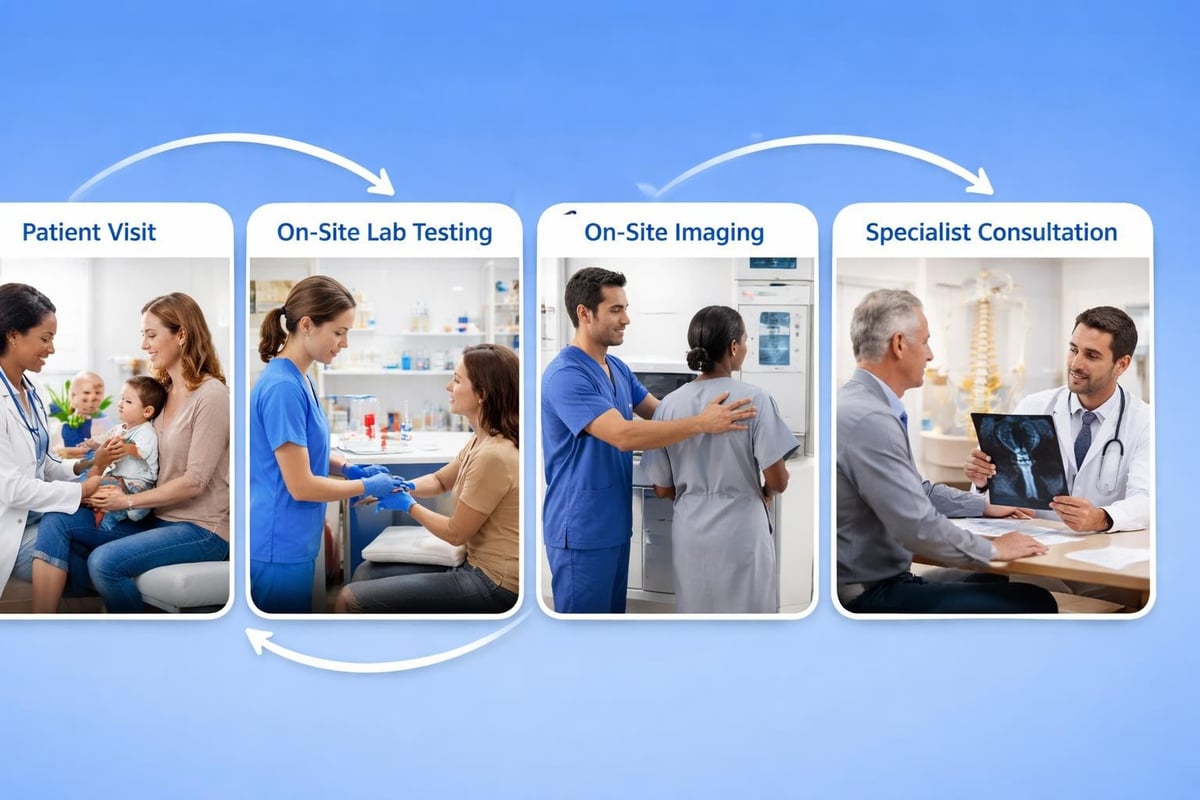
The most comprehensive family medicine offices incorporate ancillary services directly into their facilities, eliminating the need for patients to travel to separate locations for diagnostic testing or therapeutic interventions. This integration improves care coordination, reduces delays in diagnosis and treatment, and enhances the patient experience.
On-Site Diagnostic Capabilities
In-house laboratory services enable rapid testing for common conditions, with results often available during the same visit. Point-of-care testing for strep throat, influenza, urinary tract infections, and glucose monitoring provides immediate answers that guide treatment decisions. More comprehensive blood panels processed on-site or through expedited partnerships return results within hours rather than days.
Imaging capabilities vary by practice size and patient population, but many modern family medicine offices include:
- Digital X-ray systems for fracture evaluation and chest imaging
- ECG machines for cardiac rhythm assessment
- Ultrasound for pregnancy confirmation and soft tissue evaluation
- Spirometry for pulmonary function testing
- Vision and hearing screening equipment
These diagnostic tools allow providers to assess conditions comprehensively without delays inherent in external referrals. Managing a family medicine practice requires strategic investment in equipment that serves the patient population's most common needs while maintaining financial sustainability.
Subspecialty Support and Consultation
While family physicians manage the vast majority of patient concerns independently, complex cases benefit from subspecialty expertise. Progressive family medicine offices establish formal relationships with specialists who provide consultation services, either on-site or through seamless referral pathways.
On-site subspecialty clinics might include:
- Cardiology for advanced cardiovascular assessment
- Endocrinology for complex diabetes and thyroid disorders
- Orthopedics for musculoskeletal injuries requiring surgical evaluation
- Mental health professionals for comprehensive behavioral health integration
- Dermatology for skin condition management beyond primary care scope
This collaborative model maintains the family physician as the care coordinator while bringing specialist expertise to patients in a familiar, convenient setting. Electronic consultation (e-consult) platforms enable asynchronous specialist input for cases that don't require face-to-face evaluation, expediting treatment recommendations without appointment delays.
Patient-Centered Care Delivery Models
The concept of the patient-centered medical home has revolutionized how effective family medicine offices approach care delivery. This model emphasizes five core attributes: comprehensive care, patient-centered approach, coordinated care, accessible services, and quality and safety focus.
Team-Based Care Approaches
Modern family medicine practices function through collaborative teams rather than physician-dependent models. This approach maximizes each team member's training and capabilities while improving access and continuity.
The care team typically includes:
- Family physicians providing medical decision-making and complex care management
- Nurse practitioners and physician assistants handling routine visits and chronic disease follow-up
- Registered nurses coordinating care transitions and patient education
- Medical assistants managing rooming, vitals, and basic patient interactions
- Care coordinators navigating insurance, referrals, and social determinants of health
Team-based care enables practices to serve more patients effectively while maintaining quality. When structured properly, patients benefit from enhanced access, more time for education and counseling, and proactive outreach for preventive services and chronic disease management.
Continuity and Relationship Building
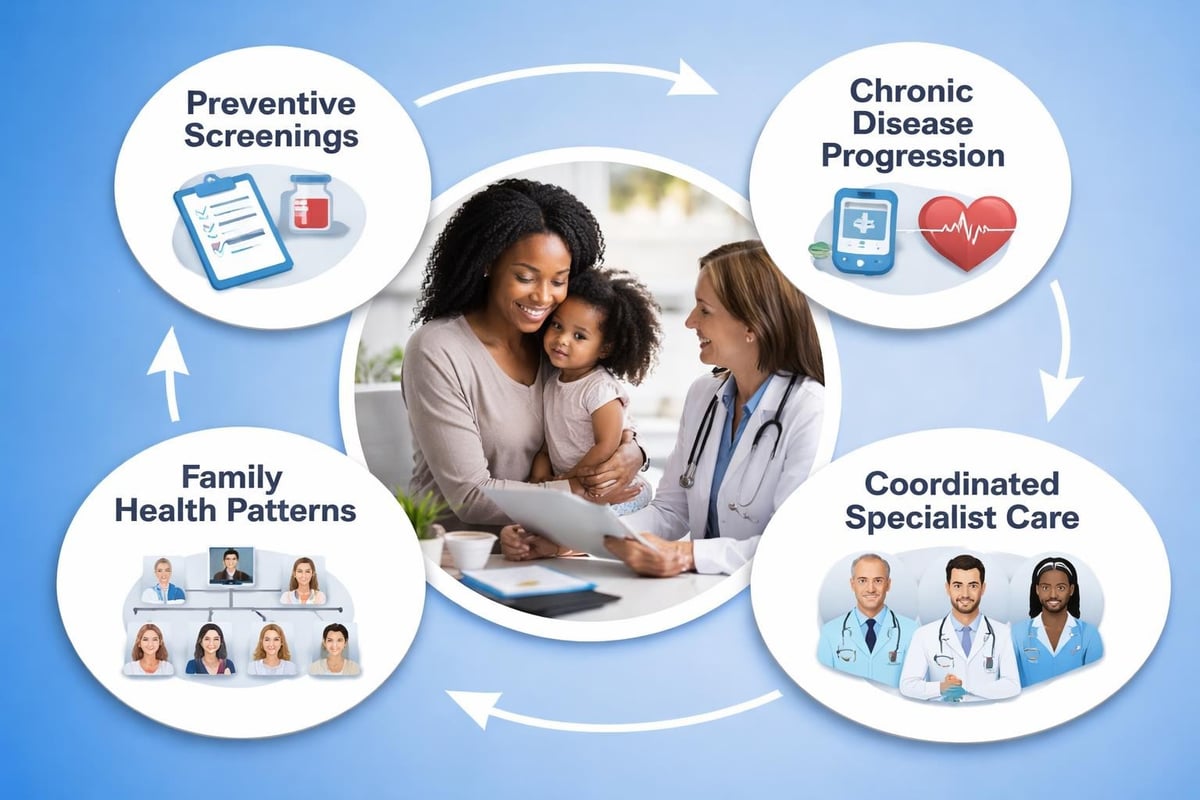
One of the defining characteristics of an excellent family medicine office is the emphasis on long-term relationships. Continuity of care improves health outcomes, enhances patient satisfaction, and reduces healthcare costs through better coordination and fewer duplicative tests or treatments.
| Continuity Benefit | Impact on Patient Care | Measured Outcome |
|---|---|---|
| Provider familiarity with patient history | More accurate diagnosis and treatment | Reduced diagnostic errors |
| Established trust relationship | Better medication adherence | Improved chronic disease control |
| Comprehensive knowledge of family dynamics | Contextual care decisions | Enhanced preventive care uptake |
| Consistent communication style | Reduced patient anxiety | Higher satisfaction scores |
Practices that prioritize continuity implement scheduling preferences allowing patients to see their preferred provider consistently. This requires balancing access demands with relationship preservation, often achieved through mixed scheduling models that reserve slots for established patients while maintaining same-day capacity.
Quality Measures and Performance Optimization
Healthcare quality measurement has become increasingly sophisticated, with family medicine offices evaluated on clinical outcomes, patient experience, cost efficiency, and population health management. Understanding these metrics helps practices identify improvement opportunities and demonstrate value to patients and payers.
Clinical Quality Indicators
Family medicine offices track numerous quality measures reflecting evidence-based care delivery. These indicators span preventive services, chronic disease management, and acute care appropriateness.
Common quality metrics include:
- Colorectal cancer screening rates in eligible patients
- Blood pressure control in hypertensive patients
- Hemoglobin A1c targets in diabetic patients
- Appropriate antibiotic prescribing for respiratory infections
- Depression screening and follow-up protocols
- Childhood immunization completion rates
Innovations in family medicine practices leverage clinical decision support tools embedded in EHR systems to prompt providers about overdue preventive services or out-of-range lab values requiring attention. These automated reminders reduce variation in care delivery and ensure patients receive guideline-concordant treatment regardless of which team member they see.
Patient Experience and Satisfaction
Beyond clinical metrics, successful family medicine offices prioritize patient experience as a core quality domain. Satisfaction surveys capture perceptions of access, communication quality, office environment, and overall care coordination.
High-performing practices implement systematic feedback collection through post-visit surveys, online reviews, and periodic comprehensive assessments. This input identifies specific improvement opportunities, from reducing wait times to enhancing staff communication training.
Key patient experience drivers:
- Ease of appointment scheduling and same-day access
- Minimal wait times before being seen
- Provider listening skills and explanation clarity
- Staff courtesy and responsiveness to questions
- Office cleanliness and comfort
- Billing transparency and insurance assistance
Practices that excel in patient experience typically implement service recovery protocols, empowering staff to address concerns immediately and follow up to ensure resolution. This proactive approach transforms potential negative experiences into opportunities to demonstrate commitment to patient-centered care.
Population Health Management
Advanced family medicine offices extend their focus beyond individual patient encounters to address the health needs of their entire patient panel. Population health management identifies high-risk individuals, closes care gaps, and implements preventive interventions at scale.
Risk Stratification and Proactive Outreach
Data analytics platforms segment patient populations by risk level, enabling targeted interventions for those most likely to experience adverse outcomes or high healthcare utilization. High-risk patients receive intensive case management, frequent touchpoints, and coordinated subspecialty care.
Moderate-risk patients benefit from structured chronic disease programs with protocol-driven visits, patient education, and remote monitoring when appropriate. Low-risk patients receive preventive service reminders and wellness coaching to maintain their health status.
Care coordinators conduct proactive outreach to patients overdue for preventive screenings, those with missed appointments, or individuals recently discharged from hospitals. This outreach reduces hospital readmissions, improves preventive care compliance, and strengthens patient engagement with their medical home.
Chronic Disease Programs
Family medicine offices increasingly implement formal chronic disease management programs that standardize care delivery while personalizing treatment plans. These programs typically focus on the most prevalent conditions: diabetes, hypertension, heart failure, COPD, and asthma.
Program components include:
- Structured visit schedules aligned with clinical guidelines
- Patient self-management education and goal setting
- Remote monitoring through connected devices when applicable
- Medication optimization and adherence support
- Nutritional counseling and lifestyle modification coaching
- Mental health screening and integration
Group visits for patients with similar conditions create peer support networks while efficiently delivering education. Shared medical appointments allow multiple patients to benefit from the same teaching while maintaining individual exam components with their provider.
Future Directions in Family Medicine
The family medicine office continues to evolve in response to technological advances, changing patient expectations, and healthcare system reforms. Understanding emerging trends helps patients and practices prepare for the next generation of primary care delivery.
Virtual care integration will expand beyond acute telemedicine visits to include remote patient monitoring, asynchronous consultations, and hybrid visit models that combine in-person and digital touchpoints. Wearable devices and smartphone health apps will feed real-time data to care teams, enabling earlier intervention before conditions worsen.
Artificial intelligence applications will support clinical decision-making through pattern recognition in imaging, predictive analytics identifying patients at risk for deterioration, and automated documentation reducing administrative burden. These tools augment rather than replace physician judgment, allowing providers to focus on complex reasoning and relationship building.
Social determinants of health will receive greater attention as practices recognize that medical care alone cannot optimize health outcomes. Family medicine offices will increasingly screen for food insecurity, housing instability, transportation barriers, and social isolation, connecting patients with community resources addressing these fundamental needs.
The integration of behavioral health into primary care settings will deepen, with mental health professionals embedded in family medicine offices providing same-day consultations, brief interventions, and ongoing treatment for common conditions like depression and anxiety. This integration reduces stigma, improves access, and enables whole-person care addressing both physical and mental health needs.
Selecting the Right Family Medicine Office
Choosing a family medicine office represents an important healthcare decision that impacts long-term health outcomes and satisfaction. Several factors deserve consideration when evaluating potential practices.
Key selection criteria:
- Provider credentials, training, and board certification status
- Same-day appointment availability for urgent concerns
- On-site ancillary services reducing need for multiple locations
- Subspecialty relationships for coordinated complex care
- Technology capabilities including patient portal functionality
- Office hours matching personal schedule constraints
- Insurance acceptance and billing transparency
- Patient satisfaction ratings and online reviews
- Cultural competency and language services if needed
Prospective patients should schedule a meet-and-greet appointment to assess rapport with potential providers and evaluate office atmosphere, staff professionalism, and overall accessibility. The right family medicine office feels welcoming, demonstrates respect for patient time, and communicates clearly about care plans and expectations.
A comprehensive family medicine office provides the foundation for lifelong health through accessible, coordinated care across all ages and conditions. By integrating advanced diagnostic capabilities, subspecialty support, and patient-centered service models, modern practices meet the evolving needs of today's patients. Dominion health offers exactly this comprehensive approach, with same-day appointments, in-house ancillary services, and subspecialty support ensuring you receive coordinated care when you need it most. Experience the difference a truly integrated family medicine office makes in your health journey.