Modern healthcare delivery demands efficiency, accessibility, and exceptional quality. The fastmed primary care model has emerged as a solution that addresses these needs by combining rapid access with comprehensive medical services. This approach transforms how patients experience healthcare, offering same-day appointments, integrated diagnostic capabilities, and coordinated specialty support all under one roof. As healthcare continues evolving in 2026, understanding what makes primary care truly effective becomes essential for both providers and patients seeking optimal health outcomes.
Understanding the FastMed Primary Care Approach
The fastmed primary care model represents a shift from traditional appointment-based medicine to a more responsive, patient-centered framework. This approach prioritizes immediate access while maintaining the comprehensive nature of primary care relationships that drive better health outcomes.
At its core, fastmed primary care combines speed with thoroughness. Patients receive timely attention without sacrificing the quality of diagnostic evaluation, treatment planning, or follow-up care. This dual focus addresses one of healthcare's most persistent challenges: balancing access with quality.
Key characteristics of effective fastmed primary care include:
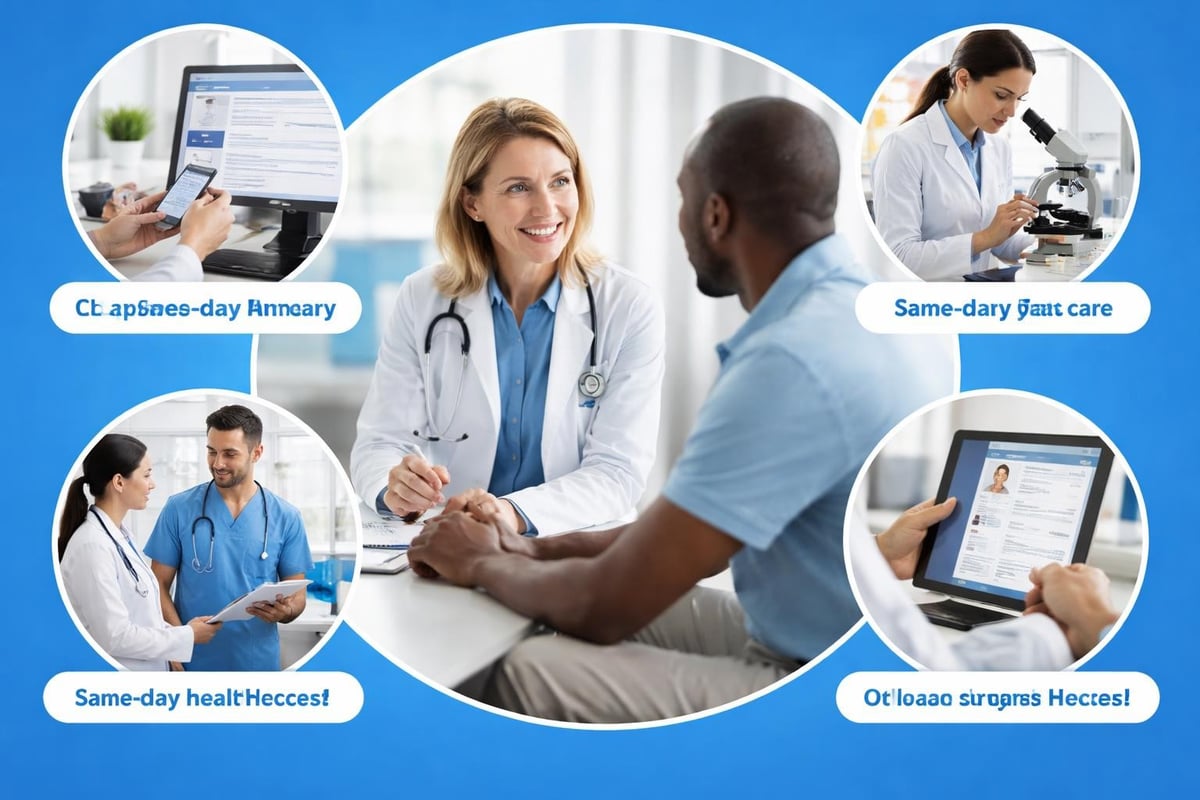
- Same-day appointment availability for urgent and routine concerns
- Extended hours that accommodate working families and diverse schedules
- In-house ancillary services eliminating referral delays
- Comprehensive care across all age groups from pediatrics to geriatrics
- Integrated electronic health records for seamless care coordination
The CMS Innovation Center’s strategy to support high-quality primary care emphasizes the critical role of accessible, patient-centered care delivery models. These frameworks recognize that quality healthcare must be both excellent and available when patients need it most.
Quality Metrics That Define Excellence in Primary Care
Measuring quality in fastmed primary care settings requires sophisticated approaches that go beyond simple visit counts. Healthcare providers now track multiple dimensions of care quality to ensure patients receive evidence-based, effective treatment.
Evidence-Based Preventive Care Measures
Research demonstrates that increased primary care visits lead to higher utilization of preventive health measures, creating a direct link between access and outcomes. When patients can see their provider promptly, they're more likely to receive timely screenings, vaccinations, and health counseling.
Primary care clinics today monitor numerous quality indicators:
- Preventive screening completion rates for cancer, diabetes, and cardiovascular disease
- Chronic disease management metrics including HbA1c control and blood pressure management
- Immunization coverage across pediatric and adult populations
- Patient experience scores measuring communication and accessibility
- Care coordination effectiveness tracking referral completion and specialist communication
| Quality Domain | Measurement Focus | Impact on Patient Care |
|---|---|---|
| Access | Same-day availability, wait times | Reduced emergency department use |
| Clinical Outcomes | Disease management, prevention | Improved health status markers |
| Patient Experience | Satisfaction, communication | Higher adherence, better relationships |
| Coordination | Referral completion, information sharing | Seamless specialty integration |
The American Academy of Family Physicians provides guidance on quality measures that help practices focus on meaningful improvements rather than simply checking boxes.
The Challenge of Quality Measurement
While quality metrics drive improvement, they also create administrative burden. Primary care physicians track an average of 57 quality measures, which can detract from patient interaction time if not managed efficiently.
Successful fastmed primary care practices implement technology solutions that automate tracking and reporting. Electronic health records with built-in quality dashboards allow providers to identify gaps in care during patient encounters, turning administrative requirements into clinical decision support tools.
Integrated Ancillary Services: The Competitive Advantage
One defining feature of modern fastmed primary care is the integration of diagnostic and therapeutic services within the primary care setting. This integration fundamentally changes the patient experience and clinical efficiency.
In-house ancillary services typically include:
- Laboratory testing with rapid result turnaround
- Point-of-care diagnostics for immediate clinical decisions
- Imaging capabilities including X-ray and ultrasound
- Minor procedure rooms for wound care and biopsies
- Pharmacy coordination or on-site dispensing
When patients receive laboratory work, imaging, and specialist consultations coordinated through their primary care provider, several benefits emerge. Wait times decrease dramatically as patients avoid scheduling multiple appointments across different facilities. Clinical decision-making accelerates because results return within hours rather than days. Care coordination improves as all information flows through a single medical record accessible to the entire care team.

This integration proves particularly valuable for managing chronic conditions. A patient with diabetes can receive HbA1c testing, foot examinations, and endocrinology consultation coordination all during a single visit. This efficiency not only saves time but also lowers total cost of care among commercially insured populations by reducing fragmentation and duplicative testing.
Same-Day Access: Meeting Patients Where They Are
The ability to see patients on the same day they request care represents more than convenience. It fundamentally changes health outcomes by catching problems early and preventing unnecessary emergency department visits.
Strategic Scheduling Models
Fastmed primary care clinics employ sophisticated scheduling strategies that balance planned appointments with same-day capacity:
- Wave scheduling with built-in flex time for urgent add-ons
- Open access blocks reserved specifically for same-day requests
- Provider teams that share patient panels for coverage continuity
- Extended hours including early morning, evening, and weekend availability
- Virtual visit options for conditions suitable for telemedicine
These approaches require careful workforce planning and process optimization. Successful practices analyze demand patterns to position capacity where patients need it most. For instance, Monday mornings and post-holiday periods typically see higher urgent care demand, requiring additional staffing during these peak times.
| Access Strategy | Implementation Method | Patient Benefit |
|---|---|---|
| Same-Day Slots | 30% of daily capacity held until morning | Urgent concerns addressed promptly |
| Extended Hours | Rotating provider coverage until 7 PM | Accessible without missing work |
| Weekend Availability | Saturday morning clinics | Seven-day care continuity |
| Nurse Triage | Initial assessment directs care level | Appropriate resource utilization |
The Dominion Health approach demonstrates how primary care practices can successfully implement these access strategies while maintaining care quality across all age groups.
Specialty Support Integration: Coordinated Care Networks
Primary care doesn't exist in isolation. The fastmed primary care model succeeds when it connects seamlessly with specialty services, creating a coordinated network that supports complex medical needs.
Effective specialty integration includes several components. Electronic referral systems transmit patient information and clinical questions directly to specialists, reducing communication gaps. Co-management agreements define which conditions primary care manages versus when specialty involvement becomes necessary. Regular case conferences bring primary care and specialty providers together to discuss complex patients.
Benefits of integrated specialty support:
- Faster specialty appointment scheduling through preferred relationships
- Clear communication channels reducing information loss
- Coordinated treatment plans preventing conflicting recommendations
- Specialist guidance available through e-consults for borderline cases
- Shared patient portals allowing all providers to view the complete record
This coordination proves especially critical for patients with multiple chronic conditions. A patient managing diabetes, hypertension, and early kidney disease benefits when their primary care physician, endocrinologist, and nephrologist communicate regularly. The primary care provider serves as the quarterback, coordinating recommendations and ensuring treatments don't conflict.
Family-Centered Care Across the Lifespan
True fastmed primary care serves patients of all ages, creating continuity for entire families. This comprehensive approach builds stronger patient-provider relationships and improves care coordination across generations.
Pediatric Through Geriatric Services
Offering care from newborns through elderly patients requires diverse clinical capabilities and age-appropriate service delivery. Practices must maintain expertise in developmental milestones, adolescent health, adult preventive care, and geriatric medicine.
The advantages of multi-generational care extend beyond convenience. Parents managing their own chronic conditions better understand how to support children with similar issues. Grandparents receiving care at the same location as grandchildren strengthen family health literacy. Providers understanding family health patterns identify genetic risks earlier.

Well-child visits, sports physicals, adult annual wellness exams, and Medicare wellness visits all follow specific protocols adapted to patient age and risk factors. Fastmed primary care practices maintain protocols and quality measures for each population segment while delivering them through unified care teams.
Technology Enablement in Modern Primary Care
Technology infrastructure separates effective fastmed primary care from traditional practices struggling with outdated systems. Modern platforms enable the speed and coordination that patients expect in 2026.
Essential technology components include:
- Comprehensive electronic health records with patient portals
- Automated appointment reminders reducing no-show rates
- Telemedicine platforms for virtual consultations
- Laboratory and imaging integration for rapid result delivery
- Population health tools identifying patients due for preventive services
Patient portals deserve special attention. When patients can view results, message providers, request prescription refills, and schedule appointments online, administrative burden decreases while patient engagement increases. Transparency builds trust as patients access their complete medical information.
Artificial intelligence and machine learning increasingly support clinical decision-making. Algorithms can identify patients at risk for hospital readmission, flag abnormal test results requiring immediate attention, and suggest evidence-based treatment protocols during encounters. These tools augment rather than replace clinical judgment, helping providers deliver higher quality care more efficiently.
Overcoming Implementation Challenges
Establishing fastmed primary care capabilities presents operational and financial challenges that practices must address strategically. Success requires careful planning across multiple dimensions.
Workforce and Training Requirements
Providing same-day access with integrated services demands adequate staffing levels and cross-training. Medical assistants need skills in laboratory specimen processing, basic diagnostic procedures, and patient triage. Nurses manage care coordination, chronic disease protocols, and telephone advice lines. Physicians balance efficiency with thoroughness, seeing higher patient volumes without compromising quality.
Recruitment and retention become critical success factors. Competitive compensation, manageable workloads, and professional development opportunities help practices attract talented clinicians. Research on quality improvement implementation shows that supporting healthcare professionals through organizational changes maintains morale and prevents burnout.
Financial Sustainability
The business model for fastmed primary care must balance investment in infrastructure with revenue generation. In-house ancillary services require equipment purchases and staffing but generate additional revenue streams. Extended hours increase operating costs but improve patient retention and satisfaction.
Value-based payment models increasingly reward the outcomes that fastmed primary care delivers. When payers compensate for quality metrics, care coordination, and reduced emergency department utilization, the economic case for comprehensive primary care strengthens considerably.
Health Equity Considerations
Access to high-quality primary care remains unequally distributed across communities. The fastmed primary care model can either improve or worsen these disparities depending on implementation choices.
Research on quality measurements in safety-net clinics reveals how metrics can overlook the complex needs of underserved populations. Effective practices adapt their approach to serve diverse communities.
Strategies for equitable care delivery:
- Multilingual staff and interpretation services
- Sliding fee scales based on income
- Transportation assistance or accessible locations
- Cultural competency training for all team members
- Community health worker programs connecting clinical care with social services
Geographic accessibility matters tremendously. Locating fastmed primary care clinics in underserved neighborhoods rather than affluent suburbs improves health equity. Evening and weekend hours serve working families who cannot take time off during traditional business hours.
Continuous Quality Improvement Processes
Maintaining excellence in fastmed primary care requires ongoing evaluation and refinement. Successful practices establish systematic improvement processes that engage the entire care team.
Regular data review identifies both successes and opportunities. Monthly quality meetings examine metrics across all domains: clinical outcomes, patient experience, access, and care coordination. When gaps appear, teams develop improvement plans with specific interventions and timelines.
Effective improvement methodologies include:
- Plan-Do-Study-Act cycles for rapid testing of changes
- Root cause analysis when problems occur
- Benchmarking against high-performing practices
- Patient advisory councils providing consumer perspective
- Staff suggestion systems leveraging frontline insights
Quality improvement succeeds when it becomes embedded in organizational culture rather than episodic initiatives. Leaders who celebrate improvements, provide resources for change, and involve staff in decision-making create environments where excellence becomes the expectation.
Patient Education and Engagement Strategies
Fastmed primary care achieves optimal outcomes when patients actively participate in their health management. Education and engagement strategies transform passive recipients of care into informed partners.
Shared decision-making represents a cornerstone of patient engagement. When providers present treatment options with evidence-based information about risks and benefits, patients make choices aligned with their values and preferences. This approach particularly matters for chronic disease management where multiple reasonable treatment paths exist.
Technology enables scalable patient education through patient portals offering condition-specific resources, automated educational messages based on diagnosis codes, and interactive tools like medication adherence trackers. These digital approaches supplement rather than replace face-to-face education during clinical encounters.
Group visits offer another powerful engagement strategy. Patients with similar conditions meet together with healthcare providers for education, support, and clinical management. These shared medical appointments prove particularly effective for diabetes, obesity, and prenatal care, creating peer support networks while delivering efficient education.
The Future Evolution of Primary Care Delivery
The fastmed primary care model continues evolving as healthcare transforms. Emerging trends will shape how practices deliver comprehensive, accessible care in coming years.
Artificial intelligence will increasingly support clinical decision-making, administrative tasks, and population health management. Natural language processing can generate visit documentation from conversations, returning time to patient interaction. Predictive analytics identify patients at risk before problems escalate, enabling proactive outreach.
Home-based care integration represents another frontier. Remote monitoring devices transmit vital signs, blood glucose readings, and other health data directly to care teams. When abnormal patterns emerge, providers intervene before hospitalization becomes necessary. This hospital-at-home model suits elderly patients and those with complex chronic conditions.
Behavioral health integration will deepen as practices recognize the interconnection between mental and physical health. Embedded therapists, psychiatrists, and care managers address depression, anxiety, and substance use disorders within the primary care setting, improving access and reducing stigma.
Quality primary care combines accessibility, comprehensive services, and evidence-based practice to deliver exceptional patient outcomes. The fastmed primary care approach demonstrates that speed and thoroughness aren't mutually exclusive when practices implement strategic scheduling, integrated ancillary services, and coordinated specialty support. Whether you need same-day care for an acute concern or ongoing management of chronic conditions, Dominion Health offers comprehensive primary care services for all ages with in-house diagnostics and specialty coordination that puts your health first.