The field of internal medicine represents one of the most comprehensive and versatile specialties in modern healthcare. An internal medicine MD serves as a diagnostician, primary care provider, and coordinator of complex medical conditions affecting adult patients. These physicians possess deep knowledge across multiple organ systems and diseases, making them uniquely qualified to manage both routine health maintenance and intricate medical puzzles. Whether you're considering a career in internal medicine or seeking to understand what these specialists offer, this comprehensive guide explores the training, responsibilities, and essential role these physicians play in healthcare delivery.
Understanding the Internal Medicine MD Specialty
Internal medicine physicians, commonly called internists, specialize in the prevention, diagnosis, and treatment of diseases affecting adults. Unlike family medicine doctors who care for patients across all age groups, an internal medicine MD focuses exclusively on adult populations, from late adolescence through the elderly years.
Core Responsibilities and Scope of Practice
The breadth of an internal medicine MD's practice distinguishes this specialty from others. These physicians manage everything from routine preventive care to complex chronic conditions requiring sophisticated diagnostic reasoning.
Primary clinical responsibilities include:
- Conducting comprehensive health assessments and physical examinations
- Diagnosing acute and chronic medical conditions
- Managing multiple concurrent health problems
- Coordinating care with subspecialists when needed
- Providing preventive health services and screenings
- Treating common illnesses and infections
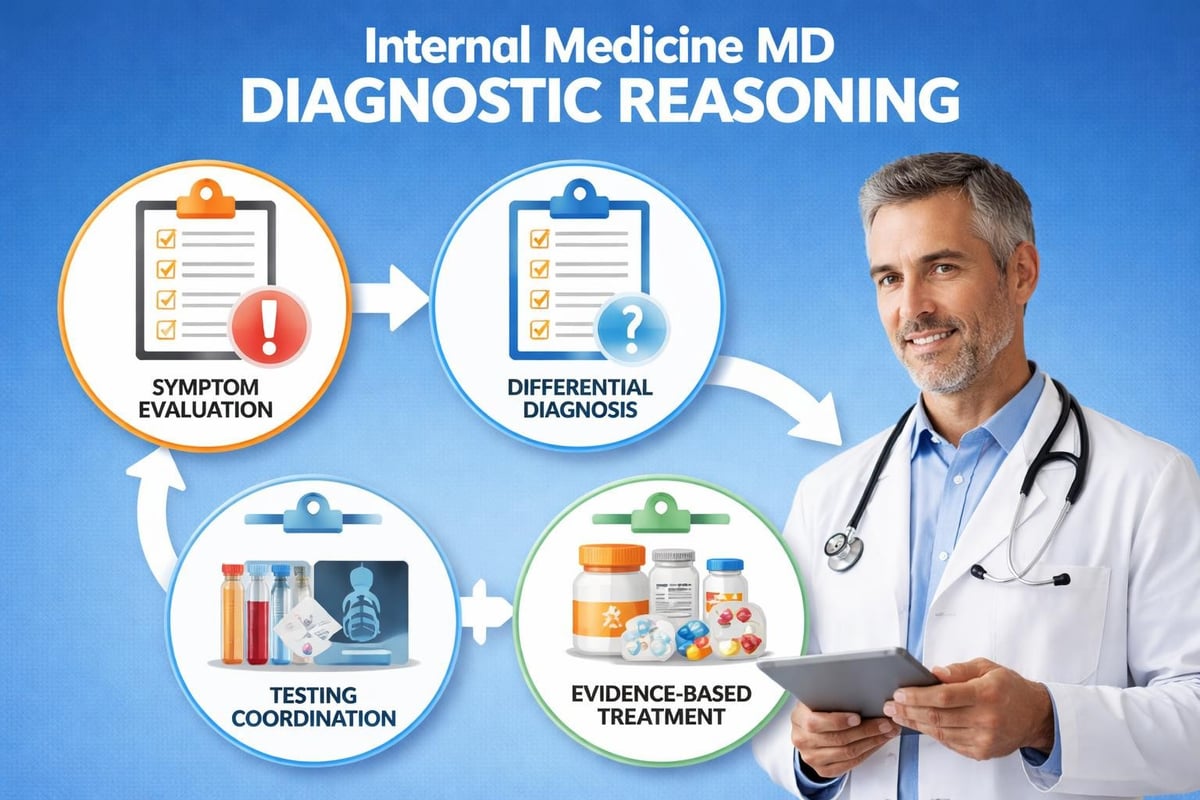
An internist serves as a medical detective, often seeing patients with undifferentiated symptoms that require careful evaluation. This diagnostic expertise makes the internal medicine MD particularly valuable in complex cases where the diagnosis isn't immediately apparent.
The clinical resources available through Mayo Clinic provide internal medicine practitioners with essential tools for evidence-based decision-making in challenging cases.
Training Pathway and Certification
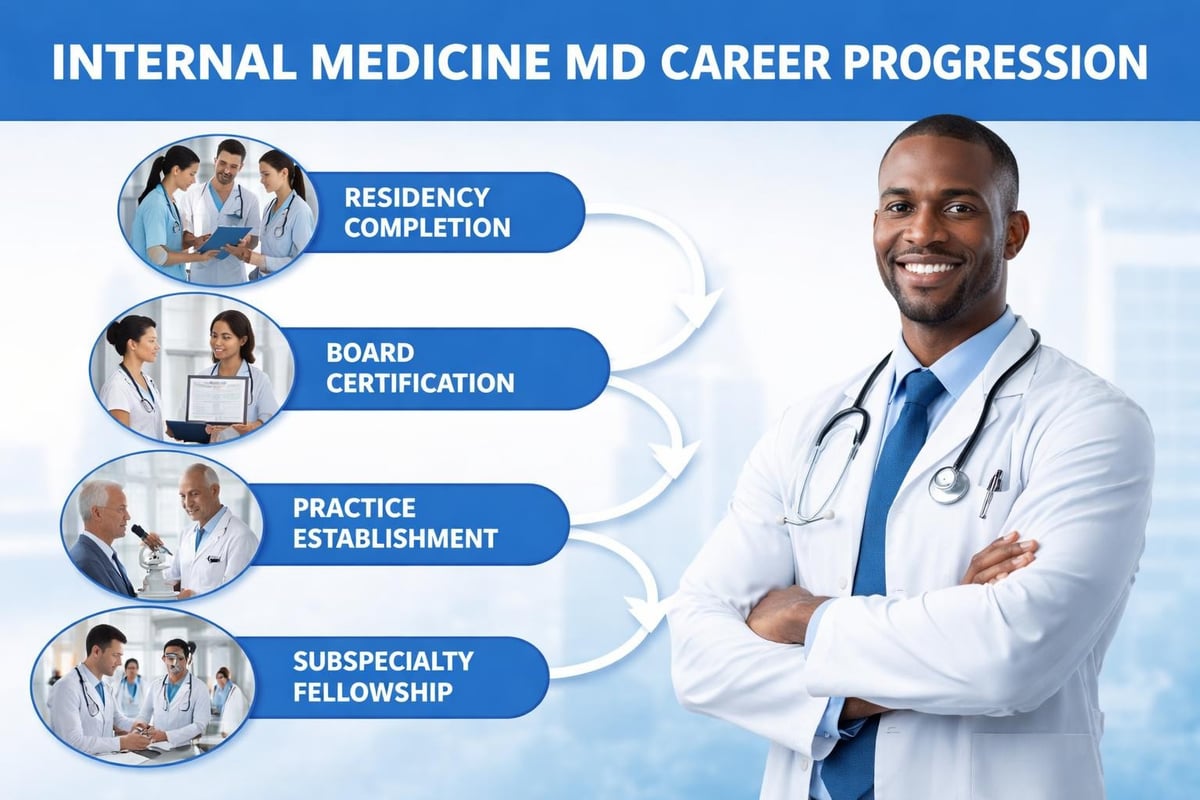
Becoming an internal medicine MD requires extensive education and training. The journey typically spans 11 to 14 years of post-secondary education.
| Training Stage | Duration | Key Activities |
|---|---|---|
| Undergraduate Education | 4 years | Pre-medical coursework, MCAT preparation |
| Medical School | 4 years | Basic sciences, clinical rotations |
| Internal Medicine Residency | 3 years | Direct patient care, subspecialty exposure |
| Fellowship (Optional) | 2-3 years | Subspecialty training |
| Board Certification | Ongoing | Initial exam, maintenance of certification |
After completing medical school, physicians enter a three-year internal medicine residency program. During residency, they gain hands-on experience managing hospitalized patients, running outpatient clinics, and responding to medical emergencies. Many residency programs expose trainees to various subspecialties, helping them decide whether to pursue additional fellowship training.
Board certification through the American Board of Internal Medicine demonstrates a physician's commitment to maintaining high standards. This certification requires passing a rigorous examination and participating in ongoing continuing medical education.
Subspecialties Within Internal Medicine
One distinguishing feature of internal medicine is the variety of subspecialty pathways available. After completing their core residency, many physicians pursue fellowship training in focused areas.
Common Internal Medicine Subspecialties
The field offers numerous subspecialty options, each addressing specific organ systems or patient populations:
- Cardiology – Heart and vascular system diseases
- Gastroenterology – Digestive system disorders
- Endocrinology – Hormonal and metabolic conditions
- Pulmonology – Respiratory system diseases
- Nephrology – Kidney diseases and dialysis
- Rheumatology – Autoimmune and musculoskeletal disorders
- Infectious Disease – Complex infections and immunology
- Hematology/Oncology – Blood disorders and cancer
- Geriatrics – Specialized care for elderly patients
- Hospitalist Medicine – Inpatient hospital care
Each subspecialty requires additional fellowship training lasting two to three years beyond residency. This advanced training develops expertise in sophisticated diagnostic techniques and specialized treatments.
Generalist vs. Subspecialist Practice
Many internal medicine MDs choose to remain generalists, practicing comprehensive adult medicine without subspecializing. Generalist internists often work in primary care settings, serving as the first point of contact for patients with health concerns.
Advantages of generalist practice:
- Broad patient population and condition variety
- Long-term patient relationships
- Comprehensive care coordination
- Work-life balance opportunities
- Primary care settings with predictable schedules
Subspecialist benefits:
- Deep expertise in specific conditions
- Advanced procedural skills
- Academic medicine opportunities
- Higher compensation potential
- Research and teaching involvement
The choice between generalist and subspecialist practice often depends on personal interests, lifestyle preferences, and career goals. Both pathways offer rewarding opportunities to impact patient health significantly.
Practice Settings for Internal Medicine Physicians
An internal medicine MD can work in diverse healthcare environments, each offering unique advantages and challenges. Understanding these settings helps patients know where to find internists and helps aspiring physicians envision their career options.
Primary Care and Outpatient Clinics
Many internists practice in outpatient settings, providing ongoing primary care to established patients. These physicians manage chronic conditions like diabetes, hypertension, and heart disease while also addressing acute illnesses and preventive care needs.
Primary care internists build long-term relationships with patients, often serving as their healthcare quarterback. They coordinate referrals to specialists, review test results, adjust medications, and provide comprehensive health management. Facilities like Dominion health exemplify modern primary care clinics where internal medicine physicians provide comprehensive services with same-day availability and integrated ancillary support.

Hospital-Based Practice
Hospitalist medicine has emerged as one of the fastest-growing careers within internal medicine. Hospital-based internists care exclusively for admitted patients, managing acute medical conditions requiring inpatient treatment.
| Practice Setting | Patient Type | Schedule Pattern | Care Focus |
|---|---|---|---|
| Outpatient Clinic | Ambulatory, scheduled | Regular office hours | Preventive, chronic disease |
| Hospital (Hospitalist) | Acutely ill, admitted | Shift work (7-14 days) | Acute conditions, procedures |
| Academic Medical Center | Complex, teaching cases | Variable | Education, research, care |
| Urgent Care | Walk-in, minor acute | Extended hours | Immediate needs |
Hospital-based practice requires managing critically ill patients, coordinating with multiple specialists, and making rapid clinical decisions. This fast-paced environment suits physicians who thrive on variety and acute problem-solving.
Academic and Research Settings
Many internal medicine MDs work in academic medical centers, combining clinical practice with teaching and research responsibilities. These physicians train medical students and residents while advancing medical knowledge through clinical trials and research studies.
Academic medicine appeals to those passionate about education and scientific discovery. The perspectives published by AAIM showcase the evolving landscape of academic internal medicine and its contributions to medical education.
Clinical Skills and Competencies
Success as an internal medicine MD requires mastering both technical medical knowledge and essential interpersonal skills. The complexity of adult medicine demands continuous learning and adaptation.
Diagnostic Reasoning Excellence
Perhaps the most critical skill for an internal medicine MD is diagnostic reasoning. Internists must synthesize information from patient histories, physical examinations, laboratory tests, and imaging studies to arrive at accurate diagnoses.
Key diagnostic competencies include:
- Pattern recognition across multiple diseases
- Differential diagnosis development
- Probability assessment and Bayesian thinking
- Evidence-based test selection
- Clinical guideline application
- Diagnostic uncertainty management
This diagnostic expertise develops through years of patient encounters and continuous study. The comprehensive coverage found in resources like Harrison’s Principles of Internal Medicine serves as foundational knowledge for practicing internists.
Communication and Patient Partnership
Effective communication transforms medical knowledge into positive patient outcomes. An internal medicine MD must explain complex medical concepts in understandable terms, engage patients in shared decision-making, and build trust through empathetic interactions.
Modern internal medicine emphasizes patient-centered care, where treatment plans align with patient values, preferences, and life circumstances. This approach requires active listening, cultural sensitivity, and collaborative problem-solving.
Procedural and Technical Skills
While less procedure-intensive than surgical specialties, internal medicine includes important technical skills:
- Advanced physical examination techniques
- Electrocardiogram interpretation
- Point-of-care ultrasound
- Joint aspiration and injection
- Paracentesis and thoracentesis
- Central line placement
- Lumbar puncture
The specific procedures an internist performs depend on their practice setting and subspecialty focus. Hospital-based internists typically maintain broader procedural skills than those in outpatient-only practices.
Technology and Innovation in Internal Medicine
The practice of internal medicine continues evolving with technological advances and new tools that enhance diagnostic accuracy and treatment effectiveness.
Electronic Health Records and Digital Health
Modern internists work extensively with electronic health records (EHR), digital communication platforms, and telehealth technologies. These tools facilitate care coordination, enable remote monitoring, and improve access to medical information.
Digital health applications include:
- Telemedicine consultations for routine follow-ups
- Remote patient monitoring for chronic conditions
- Secure messaging for patient communication
- Clinical decision support systems
- Population health management tools
The integration of artificial intelligence and machine learning is creating new possibilities for internal medicine. Research on large language models designed for internal medicine demonstrates how AI may assist with research, diagnosis, and documentation in the future.
Evidence-Based Medicine Resources
Staying current with medical evidence is essential for internal medicine MDs. Physicians regularly consult clinical guidelines, research publications, and medical databases to inform their practice.
The clinical developments and commentary available through MDedge help internists stay informed about emerging treatments and practice changes. Similarly, Medscape’s internal medicine resources provide valuable clinical references and continuing education.
Career Outlook and Professional Satisfaction
The demand for internal medicine physicians remains strong across the United States. An aging population with increasing chronic disease prevalence creates ongoing need for skilled internists.
Employment Trends and Opportunities
Internal medicine MDs enjoy diverse career opportunities and strong job security. The specialty offers flexibility in practice settings, patient populations, and work arrangements.
Current employment trends show:
- Growing demand for primary care internists
- Expansion of hospitalist programs nationwide
- Increasing opportunities in urgent care and telehealth
- Academic positions in teaching hospitals
- Leadership roles in healthcare administration
Geographic flexibility allows internal medicine physicians to practice in urban, suburban, or rural settings. Underserved areas particularly need internists willing to provide comprehensive adult care.
Compensation and Benefits
Financial compensation for internal medicine varies by subspecialty, geographic location, and practice setting. While not the highest-paying medical specialty, internal medicine offers competitive salaries with good work-life balance potential.
| Practice Type | Approximate Salary Range | Work-Life Balance | Career Flexibility |
|---|---|---|---|
| Primary Care Outpatient | $200,000 – $250,000 | Excellent | High |
| Hospitalist | $250,000 – $320,000 | Good (shift-based) | Moderate |
| Subspecialty | $300,000 – $500,000+ | Variable | Moderate |
| Academic Medicine | $180,000 – $280,000 | Good | High |
Beyond financial compensation, many internists report high professional satisfaction from building long-term patient relationships and solving complex diagnostic challenges.
Professional Development and Leadership
Internal medicine physicians frequently advance into healthcare leadership positions. Their broad clinical knowledge and systems-thinking abilities translate well to administrative and policy roles.
Physicians like Dr. Kevin Pho, an internal medicine MD and healthcare commentator, demonstrate how internists contribute to broader healthcare conversations beyond direct patient care. Leadership opportunities span hospital administration, medical group management, quality improvement initiatives, and health policy development.
Choosing an Internal Medicine Physician
For patients seeking comprehensive adult care, understanding how to select the right internal medicine MD ensures optimal health outcomes. Several factors should guide this important decision.
Credentials and Experience
Verify that your physician has completed accredited residency training and maintains board certification in internal medicine. Board certification demonstrates commitment to ongoing education and adherence to specialty standards.
Important credentials to confirm:
- Medical degree from accredited institution
- Completion of internal medicine residency
- Board certification status
- State medical licensure
- Any subspecialty certifications
- Hospital privileges and affiliations
Experience with your specific health conditions also matters. If you have complex chronic diseases, seek an internist with expertise managing those conditions.
Practice Philosophy and Communication Style
The best internal medicine MD for you matches your preferences for communication and shared decision-making. Some patients prefer directive physicians who provide clear recommendations, while others want collaborative discussions exploring multiple options.
Consider scheduling an initial consultation to assess compatibility. Evaluate whether the physician listens attentively, explains concepts clearly, and respects your health priorities and concerns.
Access and Convenience Factors
Practical considerations affect your ongoing relationship with an internal medicine physician. Evaluate appointment availability, office location, after-hours access, and ancillary services.
Modern primary care practices often provide comprehensive services under one roof, reducing the need for multiple appointments at different locations. Same-day appointment availability proves particularly valuable when acute health concerns arise.
The Future of Internal Medicine Practice
Internal medicine continues adapting to healthcare system changes, technological innovations, and evolving patient expectations. Several trends are reshaping how internists practice in 2026.
Value-Based Care Models
Healthcare reimbursement is shifting from fee-for-service to value-based models that reward quality outcomes rather than service volume. Internal medicine physicians increasingly participate in accountable care organizations, bundled payment arrangements, and quality-based incentive programs.
These models emphasize preventive care, chronic disease management, and care coordination-areas where internal medicine MDs excel. The transition requires new skills in population health management, data analytics, and team-based care delivery.
Team-Based Care Expansion
Modern internal medicine practice increasingly relies on collaborative teams including nurse practitioners, physician assistants, pharmacists, care coordinators, and other professionals. This team approach allows internists to focus on complex diagnostic and management decisions while team members handle routine care and patient education.
Effective team leadership and collaboration have become essential competencies for internal medicine physicians. These models improve access, enhance patient satisfaction, and allow physicians to work at the top of their license.
Personalized and Precision Medicine
Advances in genomics, biomarkers, and diagnostic technologies are enabling more personalized approaches to disease prevention and treatment. Internal medicine MDs increasingly incorporate genetic information, advanced imaging, and molecular diagnostics into clinical decision-making.
This precision medicine approach promises more targeted therapies with fewer side effects and better outcomes. However, it requires internists to master rapidly evolving scientific knowledge and interpret complex test results.
Continuous Learning and Professional Growth
The practice of internal medicine demands lifelong learning. Medical knowledge expands rapidly, requiring physicians to continuously update their expertise through formal education and self-directed study.
Maintenance of Certification Requirements
Board-certified internists must participate in maintenance of certification (MOC) programs to retain their credentials. These programs include regular examinations, quality improvement projects, and documented continuing medical education activities.
While some physicians view MOC requirements as burdensome, they ensure practitioners maintain current knowledge and continuously improve practice quality. The process encourages regular engagement with medical literature and evidence-based guidelines.
Professional Organizations and Networking
Membership in professional organizations provides valuable resources for internal medicine MDs. These groups offer continuing education, practice management guidance, advocacy on healthcare policy issues, and networking opportunities with colleagues.
Major organizations serving internists include the American College of Physicians, the Society of General Internal Medicine, and the Society of Hospital Medicine. Subspecialty societies provide additional resources for fellowship-trained physicians.
Research and Scholarly Activities
Many internal medicine physicians engage in clinical research, quality improvement projects, or medical education scholarship. These activities advance the specialty while providing intellectual stimulation and career development opportunities.
Research participation ranges from multi-center clinical trials to local quality improvement initiatives. Even physicians in community practice can contribute through case reports, practice innovations, and participation in practice-based research networks.
The internal medicine MD specialty offers a rewarding career path combining diagnostic challenges, long-term patient relationships, and diverse practice opportunities while serving as the backbone of comprehensive adult healthcare. Whether you need ongoing primary care management, help navigating complex health conditions, or same-day evaluation of new symptoms, an experienced internal medicine physician provides the expertise and coordination you deserve. Dominion health offers comprehensive internal medicine services with integrated ancillary support, subspecialty access, and same-day appointment availability to ensure you receive timely, coordinated care when you need it most.