Family physicians doctors serve as the cornerstone of modern healthcare, providing comprehensive medical care for patients across all ages and life stages. These versatile medical professionals are trained to diagnose and treat a wide range of health conditions while maintaining long-term relationships with individuals and families. Understanding what family physicians doctors do, how they're trained, and why they matter can help you make informed decisions about your healthcare needs and build lasting partnerships with your medical team.
The Role and Scope of Family Physicians Doctors
Family physicians doctors practice a unique medical specialty that encompasses preventive care, acute illness treatment, chronic disease management, and patient education. Unlike specialists who focus on specific organ systems or age groups, these physicians treat the whole person within the context of their family and community.
The role of family physicians extends far beyond treating symptoms. They coordinate care across multiple healthcare settings, advocate for their patients' needs, and serve as trusted advisors on everything from nutrition and exercise to mental health and end-of-life planning.
What Sets Family Medicine Apart
Family physicians doctors distinguish themselves through several key characteristics:
- Comprehensive care across all ages: They treat everyone from newborns to elderly patients
- Continuity of care: They build long-term relationships that span decades
- Holistic approach: They consider physical, emotional, and social factors affecting health
- Coordination of care: They manage referrals and communicate with specialists
- Prevention focus: They emphasize wellness and early disease detection

This comprehensive approach means family physicians doctors often serve as the first point of contact for health concerns. They handle approximately 90% of patient needs within their practice, referring to specialists only when additional expertise is required.
Training and Certification Requirements
Becoming a family physician doctor requires extensive education and rigorous training. The pathway involves multiple stages of learning and evaluation, ensuring these physicians can handle the diverse challenges they'll encounter in practice.
Educational Journey
The training requirements for family physicians begin with a four-year undergraduate degree, followed by four years of medical school. During medical school, students complete coursework in anatomy, physiology, pharmacology, and clinical rotations across various specialties.
After earning their Doctor of Medicine (MD) or Doctor of Osteopathic Medicine (DO) degree, graduates must complete a three-year family medicine residency program. These residencies provide hands-on experience in:
- Outpatient primary care clinics
- Hospital inpatient medicine
- Emergency medicine rotations
- Obstetrics and gynecology
- Pediatrics and adolescent medicine
- Geriatric care
- Behavioral health integration
Board Certification Process
Following residency, family physicians doctors pursue board certification through organizations like the American Board of Family Medicine (ABFM) or the American Osteopathic Board of Family Physicians. The certification process for osteopathic family physicians and their allopathic counterparts ensures physicians maintain current knowledge throughout their careers.
| Certification Component | Description | Frequency |
|---|---|---|
| Initial Certification Exam | Comprehensive written examination | Once after residency |
| Continuing Medical Education | Ongoing learning activities | 50-75 hours annually |
| Recertification Exam | Updated knowledge assessment | Every 6-10 years |
| Practice Improvement Activities | Quality and safety initiatives | Ongoing throughout career |
The ABFM Family Medicine Certification represents a gold standard in the field, demonstrating a physician's commitment to excellence and lifelong learning. This ongoing certification process ensures family physicians doctors stay current with the latest evidence-based practices and medical advances.
Common Services Provided by Family Physicians Doctors
Family physicians doctors offer an extensive range of medical services, making them one-stop healthcare providers for most patient needs. Their broad training enables them to address multiple health concerns during a single visit, improving efficiency and patient satisfaction.
Preventive Care and Wellness Services
Prevention forms the foundation of family medicine practice. Family physicians doctors provide:
- Annual physical examinations and health assessments
- Immunizations for all ages
- Cancer screenings (mammograms, colonoscopies, skin checks)
- Cardiovascular risk assessment and management
- Diabetes screening and prevention programs
- Weight management counseling
These preventive services help identify health risks early, when interventions are most effective and least invasive.
Acute and Chronic Disease Management
When illness strikes, family physicians doctors diagnose and treat conditions ranging from minor infections to complex chronic diseases. According to research on what family physicians do, they manage conditions including:
Acute Illnesses
- Respiratory infections and bronchitis
- Urinary tract infections
- Skin conditions and rashes
- Minor injuries and wound care
- Gastroenteritis and digestive issues
Chronic Disease Management
- Hypertension and heart disease
- Type 2 diabetes
- Asthma and COPD
- Arthritis and musculoskeletal conditions
- Thyroid disorders
- Mental health conditions including anxiety and depression

The ability to manage multiple conditions simultaneously represents a significant advantage of family physicians doctors. Many patients, especially older adults, have several chronic conditions requiring coordinated treatment plans that consider potential drug interactions and competing health priorities.
The Benefits of Establishing Care with Family Physicians Doctors
Building a relationship with family physicians doctors offers numerous advantages over fragmented care from multiple providers or urgent care visits. These benefits compound over time, leading to better health outcomes and more satisfying healthcare experiences.
Continuity and Comprehensive Medical Records
Family physicians doctors maintain complete medical histories that inform every clinical decision. They understand your baseline health status, family history, previous treatments, and personal preferences. This knowledge enables them to:
- Detect subtle changes in health status earlier
- Avoid redundant testing and procedures
- Identify patterns across multiple visits
- Provide personalized treatment recommendations
- Remember important life events affecting health
Coordinated Care Across Specialties
When specialist care becomes necessary, family physicians doctors coordinate the process from referral through follow-up. They communicate with specialists, interpret recommendations, and integrate specialized care into your overall health plan.
This coordination proves especially valuable for patients with complex medical needs. Your family physician ensures all providers work together toward common goals and prevents conflicting treatment approaches.
| Care Model | Advantages | Best For |
|---|---|---|
| Family Physician-Centered | Comprehensive, coordinated, relationship-based | Ongoing health management, multiple conditions |
| Walk-in/Urgent Care | Convenient hours, no appointment needed | Minor acute issues, travel-related needs |
| Specialist-Only | Deep expertise in specific area | Complex conditions requiring specialized knowledge |
| Emergency Department | 24/7 availability, life-threatening care | Medical emergencies only |
When to See Family Physicians Doctors Versus Specialists
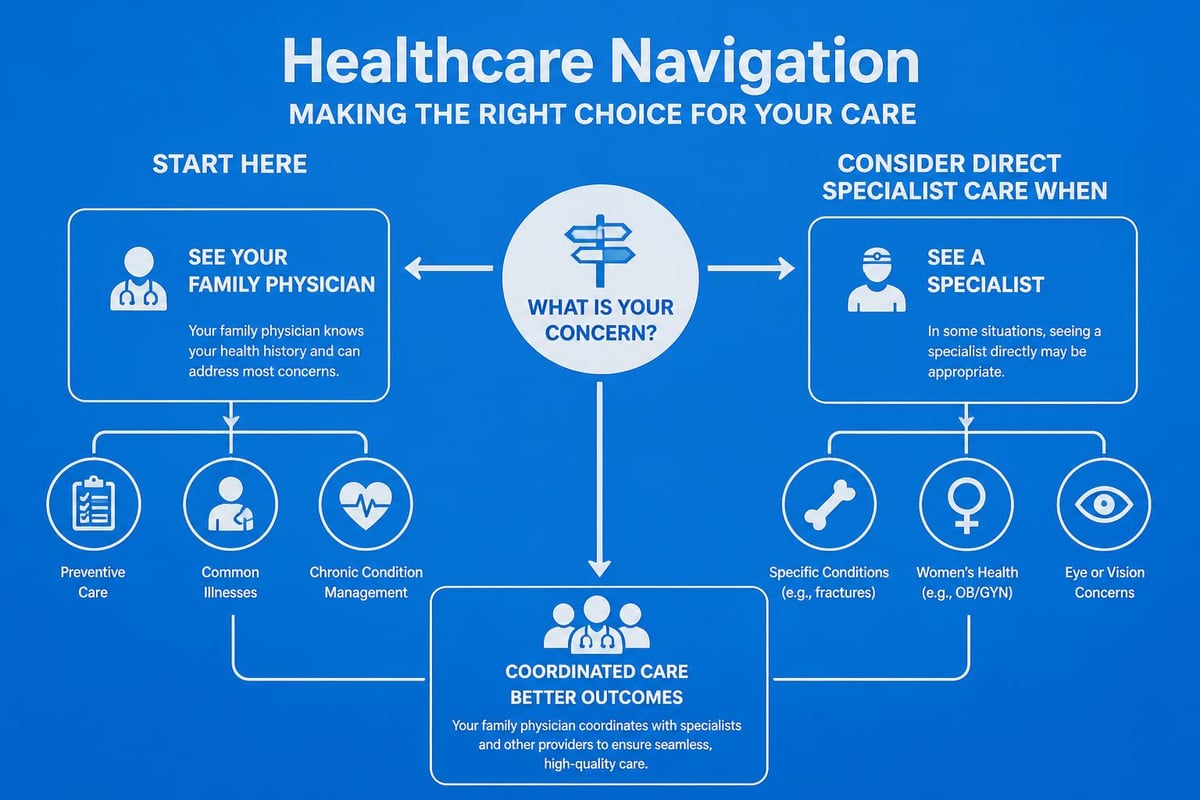
Understanding when to consult family physicians doctors versus specialists helps optimize your healthcare experience and costs. While family physicians handle the majority of health concerns, certain situations benefit from specialized expertise.
Conditions Best Managed by Family Physicians
Family physicians doctors excel at managing:
- New symptoms: Initial evaluation of any new health concern
- Common chronic diseases: Hypertension, diabetes, high cholesterol
- Preventive care: Screenings, vaccinations, health maintenance
- Minor injuries: Sprains, cuts requiring stitches, minor burns
- Mental health: Anxiety, depression, stress management
- Women's health: Annual exams, contraception, menopause management
- Pediatric care: Well-child visits, childhood illnesses, growth monitoring
When Specialist Referrals Make Sense
Family physicians doctors recognize when conditions require specialized attention and facilitate appropriate referrals:
- Complex or rare diagnoses requiring advanced testing
- Surgical interventions beyond minor procedures
- Conditions not responding to standard treatment approaches
- Second opinions on significant treatment decisions
- Highly specialized procedures or treatments
The specialty of family medicine emphasizes collaboration with specialists while maintaining primary oversight of patient care. This team-based approach ensures patients receive the right care at the right time.
Modern Family Medicine Practices and Technology Integration
Today's family physicians doctors practice in increasingly sophisticated environments that leverage technology to improve care quality, accessibility, and efficiency. Modern primary care clinics have evolved far beyond traditional exam room visits.
Same-Day Appointments and Extended Services
Contemporary family medicine practices recognize that health concerns don't follow a nine-to-five schedule. Many clinics now offer:
- Same-day appointment availability for acute concerns
- Extended evening and weekend hours
- Telemedicine consultations for appropriate conditions
- Secure patient portals for communication and results
- Electronic prescription management
- Integrated care teams including nurses, pharmacists, and care coordinators
These innovations make it easier to access your family physician when you need them most, reducing reliance on emergency departments and urgent care centers for non-emergency situations.
In-House Ancillary Services
Progressive family medicine practices increasingly offer ancillary services on-site, eliminating the need to travel to multiple locations for comprehensive care. These may include:
- Laboratory testing with rapid results
- X-ray and imaging services
- Physical therapy and rehabilitation
- Nutrition counseling
- Mental health counseling
- Minor surgical procedures
- Chronic disease education programs
Some practices partner with complementary healthcare providers to offer even broader services. For instance, patients seeking aesthetic treatments or medical weight loss programs might find partnerships with providers like Noori Cosmetic, which specializes in medical aesthetics alongside family medicine care.
Subspecialty Support and Collaboration
Modern family physicians doctors often work alongside or maintain close relationships with subspecialists who provide consultation services within the primary care setting. This integrated model offers several advantages:
| Traditional Model | Integrated Model |
|---|---|
| Separate appointments at different facilities | Coordinated visits at primary care location |
| Delayed communication between providers | Real-time collaboration and discussion |
| Multiple medical records systems | Shared electronic health records |
| Patient responsible for information transfer | Seamless information flow |
| Higher costs and time commitment | Improved efficiency and lower costs |
Choosing the Right Family Physicians Doctors for Your Needs
Selecting family physicians doctors represents one of the most important healthcare decisions you'll make. The right fit depends on multiple factors beyond clinical competence, including communication style, practice philosophy, and logistical considerations.
Key Factors to Consider
When evaluating family physicians doctors, assess:
- Board certification status: Verify current certification through official boards
- Years of experience: Consider both new physicians with recent training and experienced practitioners
- Hospital affiliations: Ensure they have privileges at quality facilities
- Practice location and hours: Convenience affects your ability to maintain regular care
- Insurance acceptance: Confirm they participate in your insurance network
- Patient reviews: Read feedback about communication, wait times, and staff interactions
- Practice size: Smaller practices offer continuity; larger ones may have better coverage
Questions to Ask During Your First Visit
Use your initial appointment to evaluate whether family physicians doctors meet your needs:
- How do you handle after-hours emergencies?
- What's your typical availability for same-day appointments?
- Do you use electronic health records and patient portals?
- How do you approach preventive care and wellness?
- What's your philosophy on medication versus lifestyle interventions?
- How do you coordinate with specialists when needed?
- What ancillary services are available in your practice?
The Future of Family Medicine
Family physicians doctors continue to evolve their practice models to meet changing patient needs and healthcare landscapes. Several trends are shaping the future of family medicine:
Value-Based Care Models
Healthcare is shifting from fee-for-service to value-based care, where family physicians doctors receive incentives for keeping patients healthy rather than simply treating illness. This alignment of incentives with patient interests encourages:
- Greater emphasis on prevention and early intervention
- More time spent on patient education and counseling
- Proactive management of chronic diseases
- Focus on outcomes rather than visit volume
Technology and Artificial Intelligence
Advanced technologies are augmenting family physicians doctors' capabilities without replacing the human element central to primary care. Innovations include:
- AI-assisted diagnostic tools that identify patterns in patient data
- Predictive analytics that flag patients at risk for certain conditions
- Remote monitoring devices for chronic disease management
- Virtual visits that improve access to care
- Electronic clinical decision support systems
Team-Based Care Expansion
Family physicians doctors increasingly lead healthcare teams that include nurse practitioners, physician assistants, behavioral health specialists, pharmacists, and care coordinators. This team approach allows each professional to practice at the top of their license while ensuring patients receive comprehensive, coordinated care.
The expansion of team-based models doesn't diminish the importance of the physician-patient relationship. Rather, it enhances the family physician's ability to provide personalized, high-quality care by delegating appropriate tasks and drawing on diverse expertise.
Building a Long-Term Partnership with Your Family Physician
The relationship between patients and family physicians doctors represents one of healthcare's most valuable assets. Nurturing this partnership requires effort from both parties but yields significant dividends in health outcomes and satisfaction.
Maximizing the Value of Your Visits
To get the most from appointments with family physicians doctors:
- Prepare a list of concerns: Prioritize your top three issues for each visit
- Bring medication lists: Include prescriptions, over-the-counter drugs, and supplements
- Track symptoms: Note when they occur, severity, and triggers
- Ask questions: Don't leave confused about your diagnosis or treatment plan
- Be honest: Share lifestyle factors affecting your health, even uncomfortable ones
- Follow through: Adhere to treatment plans and attend follow-up appointments
Maintaining Continuity of Care
Consistency strengthens the physician-patient relationship and improves health outcomes. Try to:
- Schedule annual wellness visits even when you feel healthy
- See the same physician for follow-up visits rather than whoever is available
- Update your provider about specialist visits and test results from other facilities
- Inform your physician about life changes affecting health (stress, diet, exercise, relationships)
- Participate in your practice's patient portal for ongoing communication
Building this longitudinal relationship allows family physicians doctors to detect subtle changes in your health and intervene before small problems become major concerns.
Family physicians doctors provide comprehensive, continuous care that forms the foundation of effective healthcare delivery. Their broad training, commitment to whole-person care, and emphasis on prevention make them invaluable partners in maintaining health across your lifespan. At Dominion health, our family medicine team offers same-day appointments, in-house ancillary services, and subspecialty support to provide coordinated, convenient care for patients of all ages. Contact us today to establish care with experienced family physicians who are committed to your long-term health and wellness.