The healthcare landscape is evolving beyond traditional boundaries, recognizing that human health cannot be isolated from the environment and ecosystems we inhabit. One health family medicine represents a transformative approach that acknowledges the intricate connections between people, animals, plants, and their shared environments. This comprehensive framework is reshaping how primary care clinics deliver services, enabling practitioners to address health challenges with a broader perspective that considers multiple interconnected factors affecting patient wellbeing.
Understanding the One Health Framework in Primary Care
One health family medicine integrates principles from the broader One Health movement into everyday primary care practice. The CDC’s One Health approach emphasizes that approximately 60% of known infectious diseases in people can be spread from animals, and three out of every four new or emerging infectious diseases come from animals. This reality demands a more interconnected healthcare strategy.
Primary care physicians practicing one health family medicine consider environmental exposures, zoonotic disease risks, antibiotic resistance patterns, and ecological factors when diagnosing and treating patients. Rather than viewing each patient as an isolated case, they examine the broader context of community health, environmental conditions, and disease transmission patterns.
The Three Pillars of One Health Integration
The foundation of one health family medicine rests on three essential pillars that work synergistically:
Human Health Component: Traditional medical care focusing on diagnosis, treatment, and prevention of diseases in patients across all age groups.
Animal Health Component: Recognition of how pets, livestock, and wildlife impact human health through disease transmission, allergies, and psychological wellbeing.
Environmental Health Component: Understanding how air quality, water safety, climate conditions, and ecological changes influence patient health outcomes.

Practical Applications in Daily Primary Care
One health family medicine transforms abstract concepts into tangible clinical practices. Family physicians now routinely assess factors previously outside traditional medical examinations. When a patient presents with respiratory symptoms, practitioners consider not only infectious causes but also environmental triggers like air quality, mold exposure, or pet dander.
Disease Prevention Through Environmental Awareness
Primary care clinics adopting this approach screen patients for environmental health risks during routine visits. These assessments include:
- Occupational exposure to chemicals or biological agents
- Home environment evaluation for allergens and toxins
- Water quality concerns in the patient's residential area
- Vector-borne disease risks based on geographic location
- Climate-related health vulnerabilities
A family medicine practice implementing one health family medicine principles might identify that multiple patients from the same neighborhood present with similar gastrointestinal symptoms, prompting investigation into potential water contamination or foodborne illness outbreaks. This proactive surveillance strengthens community health outcomes.
Zoonotic Disease Management
Companion animals live in approximately 67% of American households, making pet-related health considerations essential in primary care. One health family medicine practitioners discuss pet ownership during patient histories, recognizing both health benefits and potential risks.
| Pet-Related Health Factor | Consideration in Primary Care | Clinical Action |
|---|---|---|
| Zoonotic infections | Toxoplasmosis, ringworm, salmonella | Screen immunocompromised patients |
| Allergies | Pet dander, feathers | Environmental modification counseling |
| Mental health | Emotional support, loneliness reduction | Therapeutic animal interaction recommendations |
| Physical activity | Dog walking, active play | Exercise prescription integration |
Antimicrobial Stewardship in Family Practice
One health family medicine places significant emphasis on responsible antibiotic use, recognizing that antimicrobial resistance represents one of the most pressing global health threats. The WHO’s One Health perspective highlights how antibiotic overuse in human medicine, veterinary care, and agriculture contributes to resistant bacterial strains that threaten all three domains.
Strategies for Responsible Prescribing
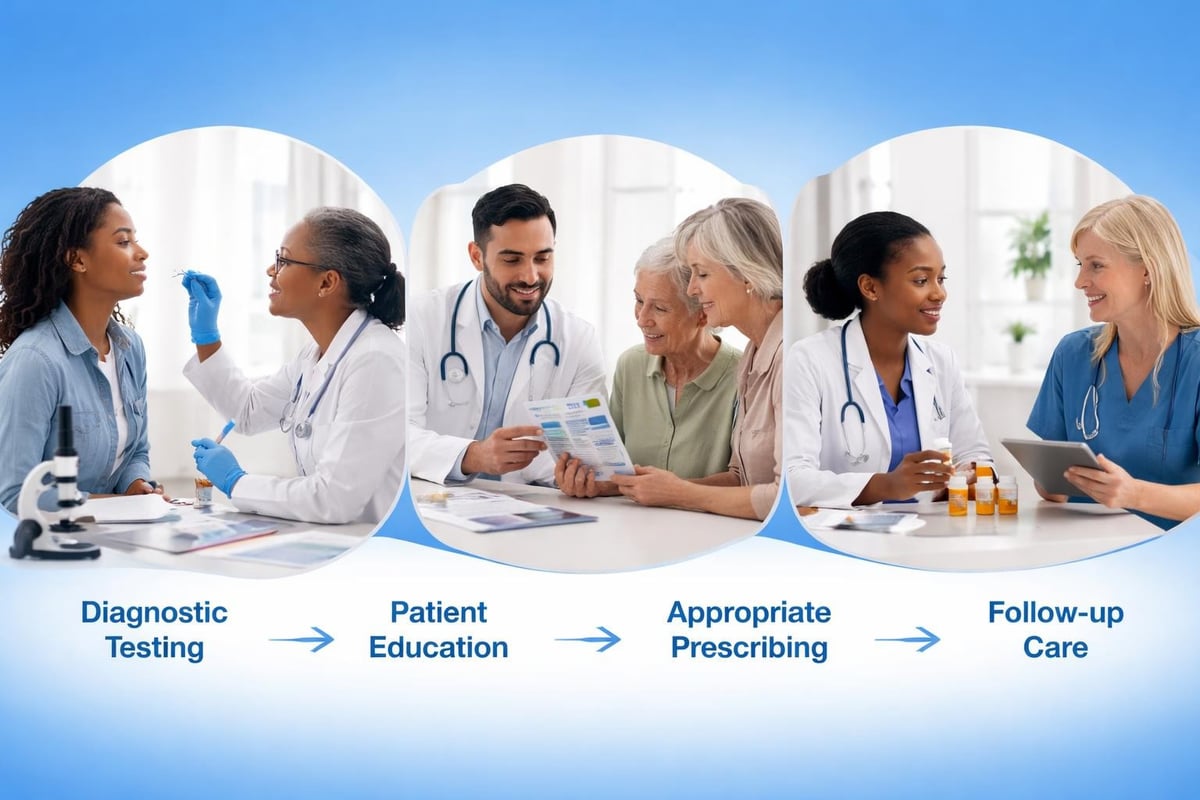
Family physicians practicing within this framework implement several evidence-based strategies:
- Diagnostic stewardship: Using rapid testing to confirm bacterial infections before prescribing antibiotics
- Patient education: Explaining why viral infections don't respond to antibiotics
- Delayed prescribing: Providing prescriptions to be filled only if symptoms worsen
- Narrow-spectrum selection: Choosing targeted antibiotics rather than broad-spectrum options
- Duration optimization: Prescribing shortest effective treatment courses
Primary care clinics with same-day appointment availability can reassess patients quickly when using delayed prescribing strategies, ensuring appropriate follow-up while reducing unnecessary antibiotic use.
Environmental Health Screening in Routine Care
Modern family medicine increasingly incorporates environmental health assessments into standard patient evaluations. One health family medicine practitioners recognize that many chronic conditions have environmental components that traditional medicine historically overlooked.
Climate Change and Patient Health
Climate-related health impacts now manifest in primary care settings across the country. Heat-related illnesses, vector-borne diseases expanding into new geographic regions, and respiratory conditions exacerbated by wildfire smoke require family physicians to understand environmental epidemiology.
Key climate-related screenings include:
- Heat vulnerability assessments for elderly and chronically ill patients
- Tick-borne disease education for patients in endemic areas
- Air quality sensitivity screening for asthma and COPD patients
- Mental health impacts of climate-related disasters
- Cardiovascular risk during extreme weather events
Primary care clinics implementing one health family medicine protocols develop relationships with local environmental health departments, meteorological services, and public health agencies to stay informed about emerging environmental health threats.
Integrating Nutrition and Food Systems Health
The FAO’s One Health framework emphasizes the critical intersection of food systems, nutrition, and human health. Family medicine practitioners applying this perspective counsel patients not only on individual dietary choices but also on food safety, agricultural practices, and sustainable nutrition.
Food Safety Counseling
One health family medicine expands nutritional counseling beyond calorie counting and macronutrient balance. Practitioners discuss:
- Foodborne illness prevention techniques
- Safe food handling for immunocompromised patients
- Local food system literacy and farmer's market safety
- Sustainable dietary patterns that benefit both human and environmental health
- Antibiotic use in livestock and implications for human health
| Food Safety Topic | Patient Population | One Health Connection |
|---|---|---|
| Raw food risks | Pregnant women, elderly | Zoonotic bacteria transmission |
| Seafood mercury | Children, pregnant women | Environmental contamination |
- Organic versus conventional | General population | Pesticide exposure reduction |
| Antibiotic-free meat | All patients | Antimicrobial resistance prevention |
Collaborative Care Models
The one health family medicine approach necessitates collaboration across traditionally separate disciplines. Progressive primary care practices build networks connecting human medicine, veterinary medicine, environmental science, and public health.
Interdisciplinary Team Structures
Modern family medicine clinics implementing this model may include:
- Family physicians trained in environmental health
- Nurse practitioners with public health backgrounds
- Care coordinators linking patients to environmental services
- Partnerships with veterinary clinics for zoonotic disease surveillance
- Relationships with environmental health specialists
These collaborative structures enable comprehensive ancillary services that address the full spectrum of factors affecting patient health, from traditional medical needs to environmental exposures.
Mental Health and Nature Connection
One health family medicine recognizes the profound psychological benefits of human connection to nature and animals. Family physicians increasingly prescribe "nature therapy" and recommend animal-assisted interventions as complementary treatments for mental health conditions.
Evidence-Based Nature Interventions
Research demonstrates measurable mental health benefits from nature exposure:
- Reduced cortisol levels after 20 minutes in natural settings
- Improved attention and cognitive function in children with ADHD
- Decreased anxiety and depression symptoms with regular outdoor activity
- Enhanced recovery from surgery in patients with views of nature
- Lower blood pressure and heart rate in natural environments
Primary care providers practicing one health family medicine write specific "park prescriptions," recommending patients spend designated time in green spaces as part of treatment plans for anxiety, depression, and stress-related conditions.

Community Health Surveillance
One health family medicine extends beyond individual patient care to community-level health monitoring. Family physicians serve as sentinel healthcare providers, often identifying emerging health threats before public health agencies detect patterns.
Early Warning Systems
Primary care clinics practicing this approach implement:
- Syndromic surveillance for unusual symptom patterns
- Geographic clustering analysis of similar diagnoses
- Seasonal disease pattern monitoring
- Environmental exposure reporting to health departments
- Collaboration with veterinarians on zoonotic disease emergence
When multiple patients present with similar symptoms from the same neighborhood or workplace, one health family medicine practitioners investigate potential environmental causes, contamination events, or disease outbreaks that might otherwise go undetected.
Pediatric Applications of One Health Principles
Children represent a particularly vulnerable population for environmental health threats, making one health family medicine especially valuable in pediatric care. Developmental stages, increased environmental exposure relative to body size, and longer lifetime exposure to environmental hazards require specialized consideration.
Childhood Environmental Health Assessments
Pediatric one health family medicine includes:
- Lead exposure screening based on housing age and location
- Pesticide exposure assessment for children in agricultural areas
- Pet-related health risk evaluation for immunocompromised children
- Outdoor play safety counseling regarding tick and mosquito-borne diseases
- Air quality monitoring for children with asthma
Family medicine clinics offering care for all ages can implement age-appropriate one health screenings, from prenatal environmental health counseling through geriatric climate vulnerability assessments.
Technology and Data Integration
Modern one health family medicine leverages technology to track environmental health data, disease patterns, and ecological changes affecting patient populations. Electronic health records now incorporate environmental health screening tools, geographic information systems mapping disease clusters, and climate health vulnerability assessments.
Digital Health Tools for Environmental Monitoring
Progressive primary care practices utilize:
- Air quality monitoring apps integrated into asthma management
- Pollen count alerts for allergic patients
- Heat index warnings for vulnerable populations
- Tick activity maps for Lyme disease prevention
- Water quality databases for well water users
These technological tools enable subspecialty support by connecting primary care physicians with environmental health specialists, toxicologists, and public health experts when complex environmental health cases arise.
Training and Education for Healthcare Providers
Implementing one health family medicine requires specific training beyond traditional medical education. Healthcare providers need knowledge spanning epidemiology, environmental science, veterinary medicine, and public health.
Core Competencies
Family physicians practicing this approach develop expertise in:
Environmental Health Literacy: Understanding how air, water, soil, and climate affect human health across the lifespan.
Zoonotic Disease Recognition: Identifying when animal contact might contribute to human illness and appropriate screening protocols.
Ecosystem Health: Comprehending how biodiversity loss, habitat destruction, and ecosystem degradation impact human disease emergence.
Community Assessment: Evaluating neighborhood-level environmental health risks and social determinants affecting patient populations.
Interprofessional Collaboration: Working effectively with veterinarians, environmental scientists, and public health professionals.
The One Health Commission provides educational resources and certification programs for healthcare professionals seeking to integrate these principles into clinical practice.
Chronic Disease Management Through One Health Lens
Chronic conditions like diabetes, cardiovascular disease, and respiratory disorders have significant environmental components. One health family medicine addresses these conditions by considering environmental exposures, lifestyle factors connected to the natural environment, and community-level determinants of health.
Diabetes Care Example
A comprehensive one health approach to diabetes management includes:
- Traditional glucose monitoring and medication management
- Nutrition counseling emphasizing sustainable, whole-food diets
- Exercise prescriptions utilizing outdoor spaces and nature exposure
- Screening for environmental endocrine disruptors affecting metabolism
- Assessment of neighborhood walkability and access to healthy foods
- Mental health support incorporating nature-based stress reduction
This multifaceted approach recognizes that diabetes management extends beyond individual behavior to encompass environmental factors, food systems, and community design.
Vaccine Strategy and Emerging Infectious Diseases
One health family medicine informs vaccination strategies by understanding disease ecology, animal reservoirs, and environmental factors influencing disease transmission. The One Health Initiative emphasizes how collaboration between human and veterinary medicine strengthens infectious disease prevention.
Emerging Disease Preparedness
Family physicians practicing this model stay informed about:
- Novel zoonotic diseases with pandemic potential
- Vector range expansion due to climate change
- Wildlife disease surveillance relevant to human health
- Livestock disease outbreaks with zoonotic potential
- Environmental changes facilitating disease emergence
This awareness enables proactive patient education, appropriate vaccination recommendations, and early recognition of emerging infectious threats in primary care settings.
One health family medicine represents the future of comprehensive primary care, acknowledging that patient health exists within broader ecological and environmental contexts. This integrated approach enables more effective disease prevention, better chronic disease management, and stronger community health outcomes by addressing the interconnected factors truly driving health and illness. At Dominion health, our commitment to providing care for all ages with comprehensive ancillary services positions us to implement one health principles that benefit individual patients and the broader community. Whether you need same-day care for acute concerns or ongoing management of chronic conditions, our integrated approach ensures all factors affecting your health receive appropriate attention. Contact Dominion health today to experience primary care that considers the full spectrum of influences on your wellbeing.