Finding quality healthcare starts with selecting the right physician for your needs. When searching for internal medicine providers near me, you're taking an important step toward better health management. Internal medicine doctors specialize in adult healthcare, managing everything from routine checkups to complex chronic conditions. This comprehensive guide will help you navigate the process of finding, evaluating, and selecting an internal medicine provider who meets your specific healthcare requirements.
Understanding Internal Medicine and What These Providers Offer
Internal medicine physicians, also called internists, complete extensive training focused exclusively on adult medicine. These doctors manage a broad spectrum of health conditions affecting patients from young adulthood through senior years.
The Scope of Internal Medicine Practice
Internists serve as primary care physicians while possessing deep knowledge of complex medical conditions. They coordinate care across multiple organ systems and often manage patients with several simultaneous health issues.
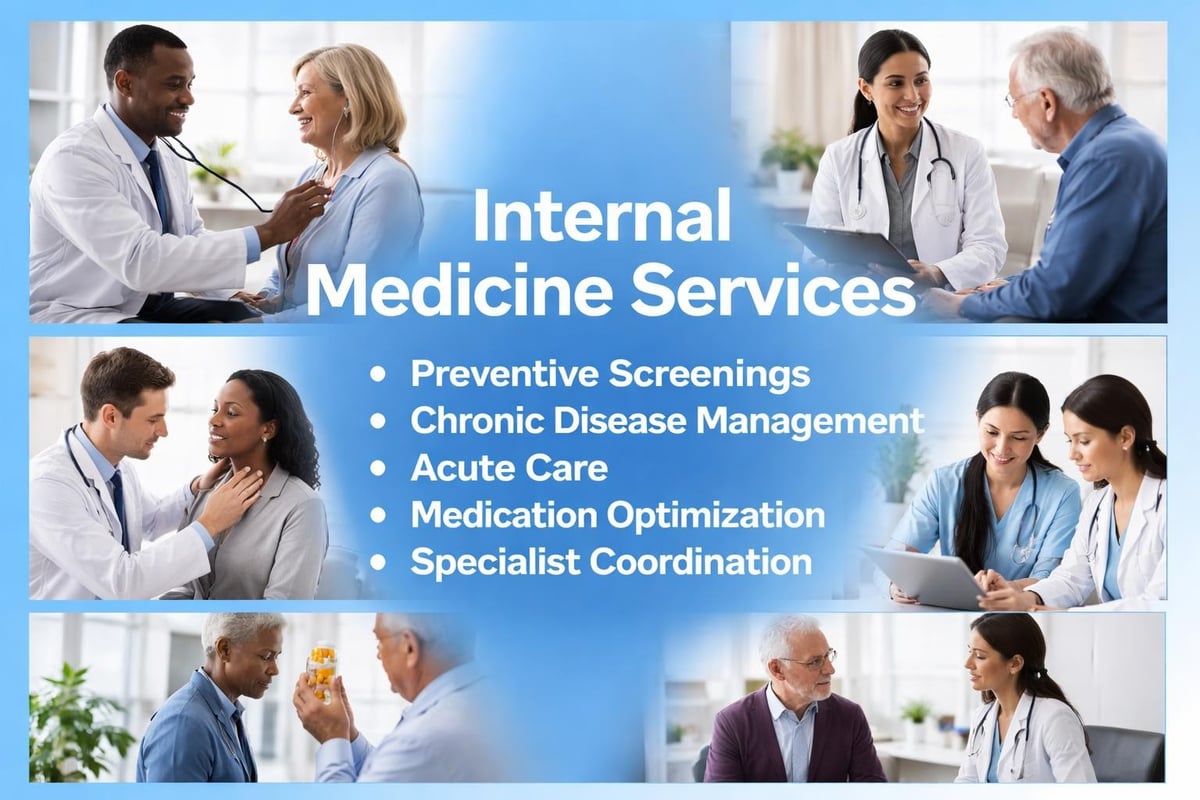
Key services provided by internal medicine doctors include:
- Preventive care and health screenings
- Chronic disease management (diabetes, hypertension, heart disease)
- Acute illness treatment
- Medication management and optimization
- Health risk assessments
- Coordination with specialists when needed
Unlike family medicine physicians who treat all ages, internists focus specifically on adult patients. This specialization allows them to develop particular expertise in conditions that commonly affect adults.
Subspecialties Within Internal Medicine
Many internal medicine providers pursue additional fellowship training in subspecialties. Understanding these distinctions helps when searching for internal medicine providers near me with specific expertise.
| Subspecialty | Focus Area | Common Conditions Treated |
|---|---|---|
| Cardiology | Heart and vascular system | Heart disease, arrhythmias, high blood pressure |
| Endocrinology | Hormonal systems | Diabetes, thyroid disorders, metabolic conditions |
| Gastroenterology | Digestive system | Liver disease, inflammatory bowel disease, reflux |
| Pulmonology | Respiratory system | Asthma, COPD, sleep disorders |
| Rheumatology | Joints and autoimmune | Arthritis, lupus, autoimmune diseases |
General internists manage most adult health concerns, referring to subspecialists when complex issues arise. This collaborative approach ensures comprehensive care while maintaining continuity with your primary physician.
How to Search Effectively for Internal Medicine Providers
The process of finding internal medicine providers near me requires more than a simple internet search. Strategic approaches yield better results and help identify physicians who match your specific needs.
Online Search Strategies That Work
Start with insurance provider directories to ensure coverage. Most insurance companies maintain updated databases of in-network physicians, which saves significant out-of-pocket costs.
Effective search methods include:
- Insurance provider websites – Filter by specialty, location, and accepting new patients
- Healthcare system directories – Large health systems list their employed physicians with detailed profiles
- Physician review platforms – Read patient experiences and ratings, but consider multiple sources
- State medical boards – Verify credentials and check for disciplinary actions
- Professional organizations – The American College of Physicians maintains physician directories
The MedlinePlus directories page offers helpful resources including the AMA DoctorFinder and Medicare comparison tools for locating qualified physicians in your area.
Evaluating Location and Accessibility
Proximity matters significantly for ongoing healthcare relationships. Consider both distance and practical accessibility when searching for internal medicine providers near me.
Accessibility factors to evaluate:
- Distance from home or work – Closer locations increase likelihood of keeping appointments
- Parking availability – On-site parking versus street parking affects convenience
- Public transportation access – Important if you don't drive or prefer alternative transportation
- Office hours – Evening or weekend availability accommodates work schedules
- Same-day appointment availability – Critical for urgent but non-emergency situations
Modern primary care practices increasingly offer extended hours and same-day appointments. These features reduce emergency room visits and provide timely care when health concerns arise unexpectedly.
Credentials and Qualifications to Verify
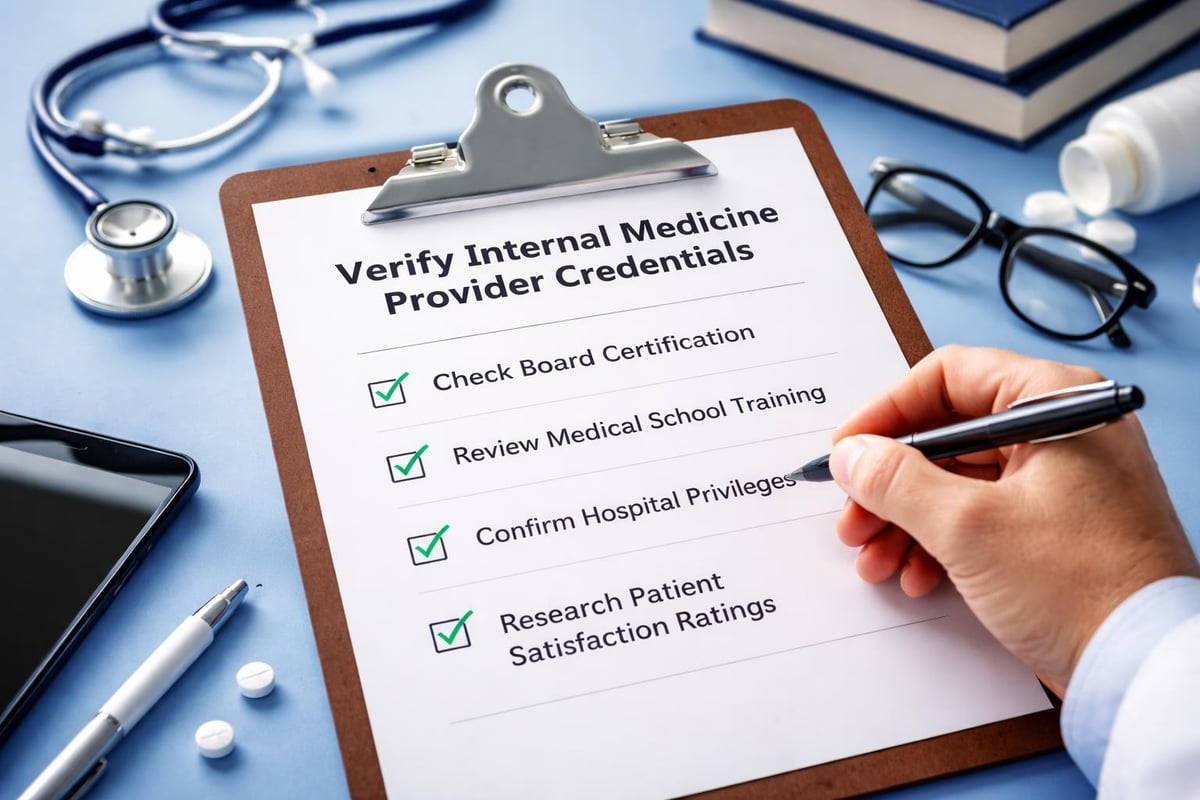
Not all physicians have identical training or expertise. Verifying credentials ensures you select from qualified internal medicine providers near me who meet professional standards.
Educational Background and Board Certification
Internal medicine physicians complete medical school followed by a three-year residency program specifically in internal medicine. Board certification demonstrates additional commitment to excellence.
| Credential | What It Means | Why It Matters |
|---|---|---|
| MD or DO | Medical degree from accredited institution | Basic requirement for practice |
| Board Certified | Passed rigorous examination by ABIM | Demonstrates current knowledge and expertise |
| Board Eligible | Completed residency, not yet certified | May indicate recent graduation |
| Fellowship Training | Additional 1-3 years in subspecialty | Specialized expertise in specific area |
| MOC (Maintenance of Certification) | Ongoing education and testing | Commitment to staying current |
Board certification from the American Board of Internal Medicine (ABIM) indicates a physician has met stringent standards and continues pursuing ongoing education. This credential renews periodically, ensuring doctors maintain current knowledge.
Experience and Hospital Affiliations
Years in practice provide valuable perspective, though newer physicians bring recent training in current evidence-based approaches. Hospital affiliations matter because they determine where you'd receive care if hospitalization becomes necessary.
Consider the quality ratings of affiliated hospitals. Physicians with privileges at well-regarded institutions often maintain higher practice standards. Additionally, hospital affiliation ensures continuity of care if you need inpatient treatment.
Questions to Ask During Your First Visit
The initial appointment with potential internal medicine providers near me serves as a mutual evaluation. This meeting helps determine whether the physician's approach aligns with your healthcare preferences and needs.
Communication Style and Philosophy
Effective healthcare requires strong physician-patient communication. During your first visit, assess how the doctor interacts and whether their style matches your preferences.
Important questions to ask:
- How do you approach preventive care and health maintenance?
- What's your communication preference for non-urgent questions (portal, phone, email)?
- How do you involve patients in treatment decisions?
- What happens if I need care outside office hours?
- How do you coordinate with specialists when referrals are needed?
- What's your approach to managing chronic conditions?
Pay attention to whether the physician listens carefully, explains concepts clearly, and respects your input. These soft skills often matter as much as medical expertise for long-term healthcare relationships.
Practice Logistics and Support Services
Understanding how the practice operates helps set appropriate expectations and ensures the environment suits your needs.
Operational details to clarify:
- Average wait times for appointments
- Availability of same-day or urgent visits
- On-site services (laboratory, imaging, procedures)
- Electronic health record access through patient portals
- Prescription refill processes
- After-hours care protocols
Practices offering comprehensive services like Dominion health streamline care by providing ancillary services and subspecialty support under one roof. This integration reduces the need for multiple locations and improves care coordination.
Comparing Insurance Coverage and Costs
Healthcare expenses significantly impact which internal medicine providers near me remain affordable options. Understanding insurance coverage and anticipated costs prevents surprise bills.
In-Network Versus Out-of-Network Providers
Insurance networks dramatically affect your out-of-pocket expenses. In-network physicians have negotiated rates with insurance companies, resulting in lower costs for patients.
| Provider Type | Typical Patient Responsibility | Insurance Coverage |
|---|---|---|
| In-Network | Copay ($20-50) or coinsurance (10-20%) | 80-100% of allowed charges |
| Out-of-Network | Higher copay/coinsurance (30-50%) | 50-70% of allowed charges |
| No Insurance | Full charge (negotiable) | None |
Before scheduling appointments, verify the physician accepts your specific insurance plan. Network participation changes periodically, so confirm current status even if online directories show the doctor as in-network.
Understanding Total Cost of Care
Beyond office visit fees, consider the total cost picture including diagnostic tests, procedures, and medications. Some practices offer integrated services that may prove more economical than using separate facilities.
Cost factors to evaluate:
- Office visit copays or coinsurance
- Laboratory and imaging fees (in-house versus external)
- Procedure costs if applicable
- Prescription medication coverage
- Annual deductibles and out-of-pocket maximums
Transparent pricing practices help patients make informed decisions. Don't hesitate to ask about costs upfront, especially for non-urgent services where price comparison is possible.
The Benefits of Integrated Primary Care
Modern healthcare increasingly emphasizes coordinated, comprehensive care rather than fragmented services. When searching for internal medicine providers near me, consider practices offering integrated approaches.
On-Site Ancillary Services
Primary care practices with in-house diagnostic capabilities provide faster results and greater convenience. Laboratory testing, imaging, and basic procedures performed on-site eliminate trips to separate facilities.
Advantages of integrated services include:
- Faster diagnosis – Same-visit lab results enable immediate treatment adjustments
- Improved coordination – Direct physician oversight of all testing and procedures
- Enhanced convenience – One location for multiple healthcare needs
- Better communication – Seamless information flow between services
- Cost efficiency – Often lower costs than hospital-based testing
This model particularly benefits patients managing chronic conditions who require frequent monitoring. Having all services accessible through your primary care provider simplifies complex care management.
Subspecialty Support and Care Coordination
Access to subspecialty consultations without extensive referral delays improves outcomes for patients with complex conditions. Practices offering subspecialty support bridge the gap between primary and specialty care.
Effective care coordination means your internal medicine provider maintains oversight even when specialists become involved. This continuity prevents conflicting treatments and ensures all providers work toward aligned health goals.

Red Flags to Watch For When Choosing a Provider
While most internal medicine providers near me offer quality care, certain warning signs suggest you should continue your search elsewhere.
Practice Management Concerns
Poor administrative systems often reflect broader quality issues. Pay attention to how the practice handles basic operations.
Warning signs include:
- Consistent difficulty scheduling appointments
- Long hold times when calling the office
- Frequent billing errors or unclear charges
- Staff turnover or unfriendly reception personnel
- Difficulty obtaining medical records
- Poor facility cleanliness or outdated equipment
These issues indicate organizational problems that may affect your care experience. Well-managed practices invest in systems that support both patient experience and clinical quality.
Communication and Care Quality Issues
How physicians and staff interact with patients reveals practice culture and priorities. Trust your instincts if something feels off.
Red flags during visits:
- Physician seems rushed or distracted
- Questions are dismissed or minimized
- Explanations are unclear or overly technical without translation
- Treatment recommendations lack evidence-based rationale
- Resistance to second opinions or specialist referrals
- Pressure to undergo unnecessary tests or procedures
Quality healthcare requires mutual respect and collaboration. If a physician doesn't meet these standards, continue searching for internal medicine providers near me who value patient partnerships.
Making Your Final Selection Decision
After researching options and meeting potential providers, synthesize the information to make your decision. This choice significantly impacts your health outcomes and satisfaction with care.
Weighing Your Priorities
Different patients prioritize different factors. Clarify what matters most for your situation.
Common priority categories:
- Convenience – Location, hours, same-day availability
- Credentials – Board certification, subspecialty training, experience
- Communication – Physician personality, explanatory style, accessibility
- Services – Integrated offerings, on-site procedures, technology
- Cost – Insurance acceptance, total anticipated expenses
- Personal comfort – Cultural competence, gender preference, language
Rank these factors based on your needs. Someone managing multiple chronic conditions might prioritize subspecialty support and integrated services, while a generally healthy person might emphasize convenience and cost.
Giving the Relationship Time to Develop
Healthcare relationships strengthen over time as physicians learn your health history and preferences. Unless significant problems emerge, commit to a provider for at least several visits before reconsidering.
Building continuity allows your doctor to notice subtle changes and trends that episodic care might miss. This longitudinal perspective proves especially valuable for preventive care and chronic disease management.
However, if fundamental mismatches in communication style or care philosophy persist after multiple visits, don't hesitate to search again for internal medicine providers near me who better suit your needs. Your health deserves a partnership that works effectively.
Maximizing Your Relationship With Your Internal Medicine Provider
Once you've selected a physician, active participation optimizes the relationship and improves health outcomes.
Preparation for Appointments
Organized patients help physicians use appointment time efficiently and thoroughly address concerns.
Effective appointment preparation includes:
- List current symptoms – Note duration, severity, patterns
- Update medication list – Include supplements and over-the-counter products
- Prepare questions – Write them down to ensure nothing is forgotten
- Bring relevant records – Previous test results, specialist reports
- Consider goals – What do you want to accomplish during this visit?
Many practices offer patient portals where you can review upcoming appointments, update information, and communicate with your care team. Utilizing these tools streamlines care and reduces administrative time during visits.
Between-Visit Communication
Modern healthcare extends beyond face-to-face appointments. Establish clear expectations for how to communicate between visits.
| Communication Method | Best Used For | Typical Response Time |
|---|---|---|
| Patient Portal Message | Non-urgent questions, prescription refills | 1-2 business days |
| Phone Call | Clarifications, moderately urgent issues | Same or next business day |
| Nurse Triage Line | Urgent concerns needing same-day guidance | Within hours |
| Emergency Services | Life-threatening situations | Immediate |
Understanding these channels prevents unnecessary emergency department visits while ensuring appropriate care for urgent situations. When searching for internal medicine providers near me, ask about their communication systems and response protocols.
Preventive Care Adherence
Internal medicine providers emphasize prevention as much as treatment. Following recommended screening schedules and preventive measures reduces disease risk and catches problems early.
Key preventive care components:
- Annual wellness examinations
- Age-appropriate cancer screenings
- Cardiovascular risk assessment
- Immunization updates
- Lifestyle counseling and support
- Mental health screening
Preventive care often feels less urgent than treating active symptoms, but it provides the greatest long-term health value. Prioritize these appointments even when you feel well.
The Role of Technology in Modern Internal Medicine
Healthcare technology continues evolving, changing how internal medicine providers near me deliver care and interact with patients.
Telehealth and Virtual Visits
The expansion of telemedicine provides convenient access to care for many situations. Virtual visits work well for follow-up appointments, medication adjustments, and minor acute issues.
Conditions appropriate for telehealth:
- Cold and flu symptoms
- Allergies and minor rashes
- Follow-up for chronic condition management
- Mental health consultations
- Prescription refills and medication reviews
- Post-procedure check-ins
Complex new problems or situations requiring physical examination still necessitate in-person visits. Understanding when each modality works best helps you utilize healthcare resources efficiently.
Electronic Health Records and Patient Portals
Digital health records improve care coordination and give patients unprecedented access to their medical information. Most internal medicine providers use electronic health records (EHR) systems with patient-facing portals.
These platforms typically allow you to:
- View test results and visit summaries
- Request prescription refills
- Schedule appointments
- Communicate with your care team
- Update personal and insurance information
- Access educational resources
Active portal use empowers patients and streamlines administrative processes. When evaluating internal medicine providers near me, inquire about their patient portal capabilities and encourage its use.
Finding the right internal medicine provider requires research, evaluation, and careful consideration of your healthcare priorities. By verifying credentials, assessing communication styles, understanding costs, and prioritizing integrated care models, you position yourself for a productive long-term healthcare partnership. If you're looking for comprehensive primary care with same-day availability, in-house ancillary services, and subspecialty support for patients of all ages, Dominion health offers an integrated approach designed to streamline your healthcare experience and improve outcomes.