Primary medical care forms the foundation of the American healthcare system, serving as the first point of contact for patients seeking medical attention. This essential service coordinates all aspects of patient health, from preventive screenings to chronic disease management, ensuring comprehensive care delivery across all age groups. Understanding how primary medical services work and what they offer can help patients make informed decisions about their healthcare journey.
What Primary Medical Care Encompasses
Primary medical care represents a broad spectrum of healthcare services designed to address the majority of health concerns individuals face throughout their lives. These services extend far beyond treating common illnesses, incorporating preventive medicine, health education, and ongoing disease management.
The scope of primary care includes routine physical examinations, immunizations, health screenings, and treatment for acute conditions like infections or injuries. Primary care providers play a crucial role in managing chronic conditions such as diabetes, hypertension, and asthma, coordinating care with specialists when necessary.
Core Services Offered
Primary medical facilities typically provide:
- Annual wellness examinations and health risk assessments
- Diagnosis and treatment of acute illnesses and injuries
- Chronic disease management and monitoring
- Preventive care services including vaccinations
- Health counseling and patient education
- Coordination of care with specialists and ancillary services
- Management of prescription medications
- Basic diagnostic testing and screenings
These comprehensive services ensure patients receive continuity of care throughout different life stages. Having a consistent primary medical provider allows for better health outcomes through personalized treatment plans based on complete medical histories.

The Patient-Centered Medical Home Model
Modern primary medical care increasingly adopts the Patient-Centered Medical Home (PCMH) model, which emphasizes coordinated, accessible, and quality-driven care. The PCMH model transforms traditional primary care delivery by focusing on strong patient-provider relationships and comprehensive care coordination.
This approach ensures that patients receive the right care at the right time, with their primary medical team serving as the central hub for all healthcare needs. The model prioritizes accessibility, offering same-day appointments and extended hours to accommodate patient schedules.
Key Features of Patient-Centered Care
| Feature | Benefit | Implementation |
|---|---|---|
| Comprehensive Care | Addresses all patient health needs | Multi-disciplinary team approach |
| Coordinated Services | Seamless communication across providers | Integrated electronic health records |
| Accessible Care | Reduced wait times and barriers | Same-day appointments available |
| Quality Focus | Evidence-based treatment protocols | Continuous quality improvement |
| Patient Partnership | Shared decision-making | Active patient engagement in care plans |
The PCMH model demonstrates measurable improvements in patient satisfaction, health outcomes, and cost efficiency. Patients benefit from having a dedicated care team that knows their complete medical history and coordinates all aspects of their treatment.
Benefits of Establishing Primary Medical Care
Establishing a relationship with a primary medical provider offers numerous advantages that extend well beyond convenient access to healthcare services. Research consistently demonstrates that patients with regular primary care experience better health outcomes and lower healthcare costs.
Preventive Care Advantages: Regular visits enable early detection of potential health issues before they become serious. Primary medical providers monitor risk factors, recommend appropriate screenings based on age and family history, and provide counseling on lifestyle modifications.
Continuity of Care: Having the same provider over time creates a partnership built on trust and understanding. Your primary medical team develops comprehensive knowledge of your health history, medications, allergies, and personal preferences, leading to more personalized and effective care.
Care Coordination Benefits: When specialist care becomes necessary, your primary medical provider serves as the quarterback, coordinating referrals, sharing medical records, and ensuring all providers work together toward common treatment goals.
Cost-Effectiveness and Efficiency
- Lower overall healthcare expenditures through preventive care
- Reduced emergency room visits for non-emergent conditions
- Better medication management preventing adverse interactions
- Streamlined diagnostic testing avoiding duplication
- Improved management of chronic conditions reducing hospitalizations
Research shows that strong primary care systems correlate with better population health outcomes and more equitable healthcare distribution.
Choosing Your Primary Medical Provider
Selecting the right primary medical provider represents one of the most important healthcare decisions you'll make. Understanding the types of providers available and what factors to consider helps ensure you find the best fit for your needs.
Primary care physicians may include family medicine doctors, internists, or pediatricians, depending on the patient population they serve. Additionally, nurse practitioners and physician assistants often provide primary medical care under collaborative practice agreements.
Selection Criteria to Consider
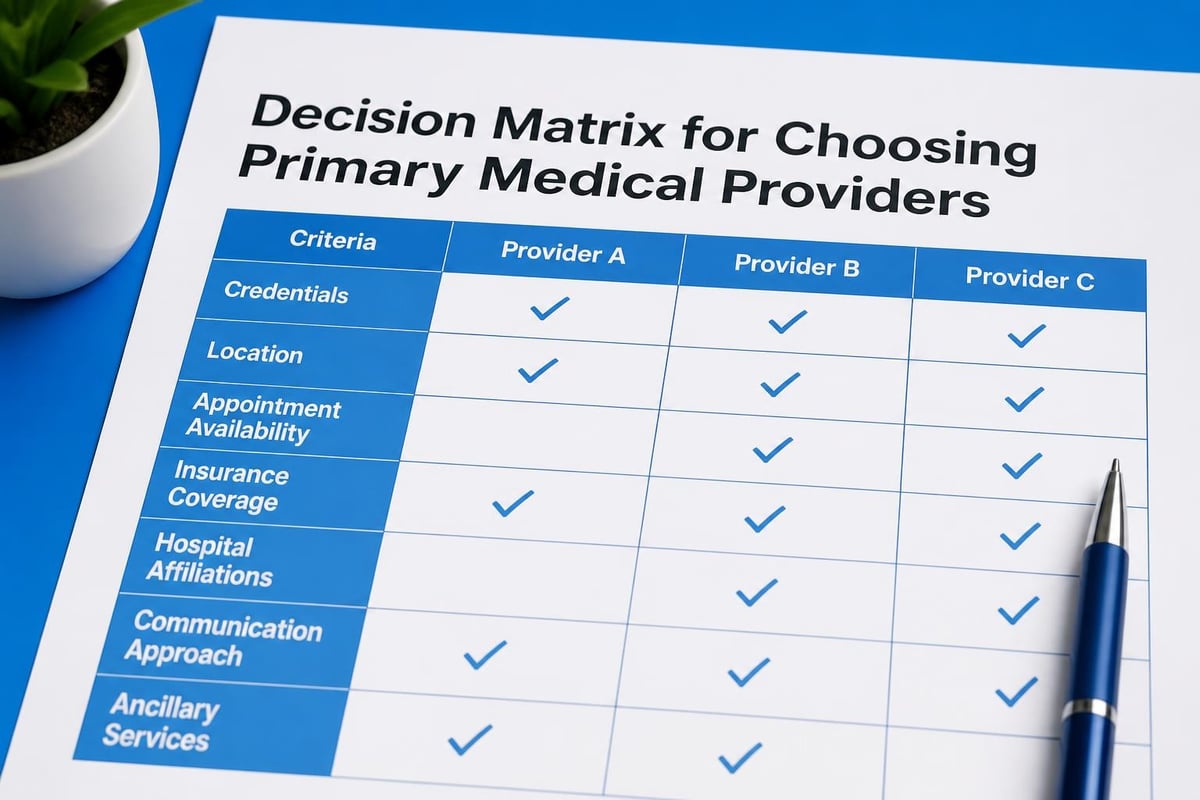
When evaluating potential primary medical providers, consider these important factors:
- Provider credentials and experience: Verify board certification, training background, and years in practice
- Office location and accessibility: Consider proximity to home or work and available parking
- Appointment availability: Assess same-day appointment options and evening or weekend hours
- Insurance acceptance: Confirm the provider participates in your insurance network
- Hospital affiliations: Understand where the provider admits patients if hospitalization becomes necessary
- Communication style: Ensure the provider listens well and explains things clearly
- Ancillary services availability: Determine if laboratory, imaging, or other services are available on-site
Taking time to research and interview potential providers pays dividends in long-term satisfaction and health outcomes. Comprehensive primary care services should feel accessible, responsive, and personalized to your unique needs.
Comprehensive Services Within Primary Medical Settings
Modern primary medical facilities offer increasingly comprehensive services that previously required visits to multiple locations. This integrated approach saves patients time while ensuring coordinated care delivery.
In-House Ancillary Services: Many primary care settings now include laboratory services, diagnostic imaging, and pharmacy services on-site. This convenience allows patients to complete multiple healthcare tasks in one visit, with results quickly available to their care team.
Subspecialty Support: Access to subspecialty consultation within primary medical settings bridges the gap between general and specialized care. Patients benefit from expert opinions while maintaining the continuity of their established primary care relationship.
Types of In-House Services
| Service Category | Examples | Patient Benefits |
|---|---|---|
| Diagnostic Testing | Blood work, urinalysis, EKG | Immediate results, faster diagnosis |
| Imaging Services | X-rays, ultrasounds | One-stop convenience, coordinated interpretation |
| Specialty Consultations | Cardiology, endocrinology | Seamless referrals, integrated care plans |
| Preventive Services | Immunizations, screenings | Comprehensive wellness approach |
| Chronic Care Management | Diabetes education, hypertension monitoring | Consistent team-based support |
This comprehensive approach aligns with the Agency for Healthcare Research and Quality’s vision for transformed primary care delivery that improves access while maintaining quality.
Same-Day Appointments and Urgent Care
The ability to see a primary medical provider on the same day addresses a critical need in modern healthcare. Many health concerns require prompt attention but don't constitute true emergencies warranting emergency department visits.
Urgent Care Within Primary Settings: Primary medical practices offering same-day appointments provide a middle ground between waiting days for routine appointments and visiting costly emergency rooms. Patients receive care from providers familiar with their medical history in a comfortable, familiar environment.
Common conditions appropriate for same-day primary medical visits include:
- Respiratory infections and flu symptoms
- Minor injuries requiring evaluation or suturing
- Urinary tract infections and similar acute conditions
- Skin rashes or allergic reactions
- Medication side effects requiring immediate attention
- Acute exacerbations of chronic conditions
Advantages of Same-Day Access
Same-day appointment availability demonstrates a practice's commitment to patient-centered care. Benefits extend beyond convenience to include:
- Reduced emergency department utilization for non-emergent conditions
- Lower out-of-pocket costs compared to urgent care centers or ERs
- Continuity with existing provider relationships and medical records
- Comprehensive follow-up integrated into ongoing care plans
- Familiarity with patient history enabling more accurate diagnosis
This accessible approach to primary medical care ensures patients receive timely attention when health concerns arise, preventing minor issues from escalating into more serious conditions.

Primary Medical Care Across the Lifespan
Comprehensive primary medical services adapt to meet changing healthcare needs throughout different life stages. Family medicine practices provide care for patients of all ages, creating opportunities for entire families to establish care with a single trusted provider.
Pediatric Primary Care: Children require specialized attention as they grow and develop. Primary medical providers monitor developmental milestones, administer age-appropriate vaccinations, and address childhood illnesses. Building a relationship with a primary care provider early in life establishes healthy habits and creates a medical home for children.
Adult Primary Care: Adults benefit from primary medical care focused on preventive screenings, chronic disease management, and health optimization. Providers help patients navigate the complex healthcare system, coordinate specialist care when needed, and address both physical and mental health concerns.
Geriatric Considerations: Older adults often manage multiple chronic conditions requiring careful coordination. Primary medical providers specializing in geriatric care understand the unique challenges facing elderly patients, including medication management, fall prevention, and maintaining independence.
Age-Specific Services
Different age groups require different primary medical services:
- Infants and children: Well-child visits, immunizations, growth monitoring, developmental assessments
- Adolescents: Sports physicals, mental health screening, reproductive health counseling
- Young adults: Preventive care establishment, lifestyle counseling, family planning
- Middle-aged adults: Cancer screenings, cardiovascular risk assessment, chronic disease prevention
- Seniors: Comprehensive geriatric assessments, medication reviews, mobility evaluation
The ability to receive age-appropriate care from a consistent provider or practice creates continuity that improves health outcomes across generations.
Technology Integration in Primary Medical Care
Modern primary medical practices leverage technology to enhance patient care and improve accessibility. Electronic health records enable seamless information sharing, while patient portals provide 24/7 access to medical information.
Telehealth Capabilities: Virtual visits expanded significantly and continue offering valuable options for follow-up appointments, medication adjustments, and management of stable chronic conditions. Primary medical providers using telehealth extend their accessibility while maintaining quality care delivery.
Remote Monitoring: Patients with chronic conditions benefit from remote monitoring technologies that transmit vital signs and other health data directly to their primary medical team. This continuous monitoring enables proactive interventions before problems escalate.
Technology enhances rather than replaces the patient-provider relationship at the heart of primary medical care. Digital tools extend accessibility and improve convenience while preserving the personal connection essential to effective healthcare.
Coordinating Care with Specialists
One of the most valuable functions of primary medical care involves coordinating patient care across multiple providers and settings. When health concerns require specialist expertise, your primary care provider facilitates referrals, shares medical records, and ensures all providers work together cohesively.
Referral Management: Primary medical providers determine when specialist consultation adds value to patient care. They select appropriate specialists, communicate relevant medical history, and specify questions needing expert input.
Care Integration: After specialist visits, primary medical providers integrate recommendations into comprehensive care plans. They ensure patients understand specialist advice, coordinate any necessary follow-up, and monitor progress toward treatment goals.
This coordination prevents fragmented care where specialists work in isolation without awareness of other treatments or conditions. Your primary medical team serves as the central information hub, ensuring all providers have complete information needed for optimal decision-making.
Benefits of Coordinated Care
| Coordination Aspect | Impact on Patient Care |
|---|---|
| Information Sharing | Complete medical picture for all providers |
| Treatment Alignment | Consistent approach across specialties |
| Medication Management | Prevention of dangerous drug interactions |
| Appointment Scheduling | Efficient use of patient time |
| Follow-up Tracking | Ensuring recommendations are implemented |
Effective coordination through primary medical care improves outcomes while reducing the burden on patients to serve as their own care managers.
Insurance and Payment Considerations
Understanding how primary medical care fits within your insurance coverage helps maximize benefits while minimizing out-of-pocket costs. Most insurance plans, including Medicare and Medicaid, emphasize preventive care through primary providers.
Preventive Services Coverage: The Affordable Care Act requires most insurance plans to cover preventive services without cost-sharing when provided by in-network primary medical providers. These services include annual wellness visits, various cancer screenings, immunizations, and counseling services.
Cost Savings Through Prevention: Regular primary medical care reduces long-term healthcare costs by identifying and addressing health issues early. Insurance companies recognize this value, often offering incentives for establishing care with a primary provider.
Patients should verify their insurance network participation before establishing care. Visiting Dominion health can help you understand insurance acceptance and payment options.
Maximizing Insurance Benefits
Patients can optimize their insurance benefits through primary medical care by:
- Scheduling annual preventive visits to utilize covered services
- Addressing multiple concerns during single appointments when appropriate
- Using in-network providers and facilities for referrals
- Completing recommended screenings at age-appropriate intervals
- Managing chronic conditions proactively to prevent costly complications
Understanding your coverage enables informed healthcare decisions while controlling costs.
Primary medical care serves as the cornerstone of effective healthcare delivery, providing comprehensive services that address preventive, acute, and chronic health needs across all ages. Establishing a relationship with a trusted primary care provider creates a healthcare partnership focused on your long-term wellness and optimal health outcomes. When you need accessible, coordinated care from a team that knows your complete medical history, Dominion health offers comprehensive primary care services with same-day appointments, in-house ancillary services, and subspecialty support for patients of all ages.