Primary medical doctors serve as the cornerstone of comprehensive healthcare delivery, acting as the first point of contact for patients across all age groups and medical needs. These physicians build long-term relationships with patients, coordinate care across multiple specialties, and provide continuity that improves health outcomes and reduces healthcare costs. In today's complex medical landscape, understanding the role and value of primary medical doctors has become more critical than ever for individuals seeking quality healthcare and families planning for their long-term wellness needs.
The Evolving Role of Primary Medical Doctors in Modern Healthcare
Primary medical doctors have transformed significantly over the past decade, expanding their scope beyond traditional office visits to become comprehensive healthcare coordinators. These physicians now integrate preventive care, chronic disease management, mental health screening, and specialty coordination into their daily practice.
The modern primary care physician manages an average of 2,300 patients annually, addressing everything from routine checkups to complex multi-system conditions. This breadth of responsibility requires continuous education, advanced diagnostic skills, and the ability to synthesize information from multiple sources.
Comprehensive Services Offered by Primary Care Practices
Today's primary medical doctors provide an extensive range of services that address both immediate and long-term health needs:
- Preventive care and health screenings including annual physicals, immunizations, and age-appropriate cancer screenings
- Chronic disease management for conditions like diabetes, hypertension, heart disease, and asthma
- Acute illness treatment for infections, injuries, and sudden health concerns
- Mental health evaluation and initial management of anxiety, depression, and stress-related conditions
- Coordination of specialist care through referrals and ongoing communication with subspecialists

Research shows that Americans rely mainly on their own doctor for medical advice, underscoring the trust patients place in their primary care relationships. This trust forms the foundation for effective healthcare delivery and improved patient outcomes.
Selecting the Right Primary Medical Doctor for Your Needs
Choosing a primary care physician represents one of the most important healthcare decisions you'll make. The right doctor-patient relationship can significantly impact your health trajectory, treatment adherence, and overall satisfaction with medical care.
Key Factors to Consider When Evaluating Primary Care Physicians
| Factor | Why It Matters | Questions to Ask |
|---|---|---|
| Board Certification | Ensures current medical knowledge and professional standards | Is the doctor board-certified in family medicine or internal medicine? |
| Accessibility | Impacts ability to receive timely care | What are wait times for appointments? Are same-day visits available? |
| Communication Style | Affects understanding and comfort level | Does the doctor listen carefully and explain clearly? |
| Technology Integration | Enables convenient care access | Does the practice offer patient portals, telehealth, and electronic records? |
| Ancillary Services | Reduces need for multiple locations | Are lab work, imaging, and other services available on-site? |
The WebMD guide on finding doctors in the digital age provides additional insights into leveraging online resources during your search. Modern patients increasingly value convenience and comprehensive care under one roof, reducing the fragmentation that often plagues healthcare delivery.
Understanding Different Types of Primary Medical Doctors
Primary care encompasses several medical specialties, each with distinct training and patient population focus:
Family Medicine Physicians treat patients of all ages, from newborns to elderly adults. They provide comprehensive care across the lifespan and often develop multi-generational relationships with families.
Internal Medicine Physicians (internists) specialize in adult medicine, typically caring for patients from young adulthood through end-of-life. Many internists develop subspecialty expertise in areas like cardiology or endocrinology while maintaining primary care practices.
Pediatricians focus exclusively on children's health from birth through adolescence, providing developmental monitoring, immunizations, and age-specific care.
The choice between these specialists depends on your family composition, age, and specific health needs. Many clinics now employ multiple types of primary medical doctors to serve diverse patient populations effectively.
The Critical Importance of Continuity in Primary Care
Continuity of care with primary medical doctors produces measurable health benefits that extend far beyond convenience. Patients who maintain long-term relationships with their primary care physicians experience better health outcomes, lower hospitalization rates, and reduced healthcare costs over time.
Measurable Benefits of Consistent Primary Care Relationships
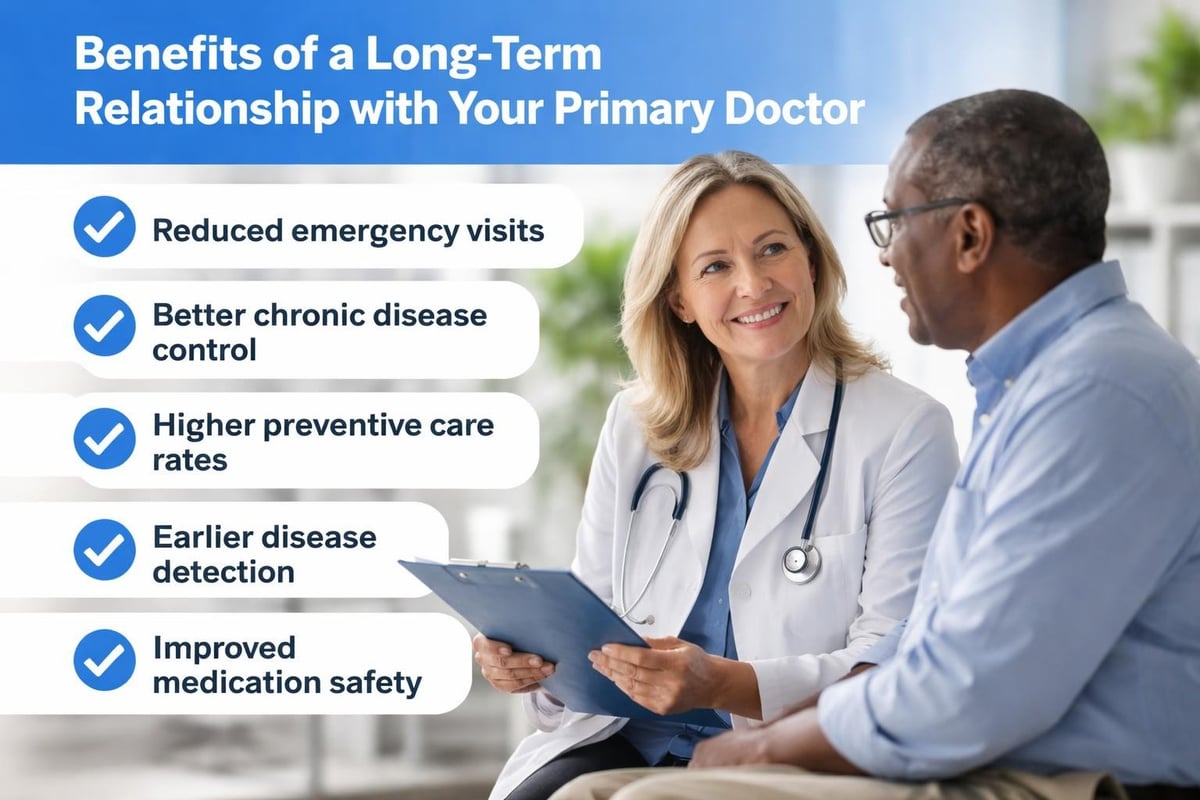
Studies consistently demonstrate that regular engagement with primary medical doctors leads to:
- 30% reduction in emergency department visits compared to patients without established primary care
- Improved management of chronic conditions with better control of blood sugar, blood pressure, and cholesterol levels
- Higher rates of preventive care compliance including cancer screenings and immunizations
- Earlier detection of serious conditions through regular monitoring and familiarity with baseline health
- Better medication management with fewer adverse drug interactions and improved adherence
This continuity allows physicians to recognize subtle changes in health status that might escape notice during isolated visits. The cumulative knowledge built over years of care creates a comprehensive health narrative that informs better clinical decisions.
Coordination of Specialty Care and Complex Conditions
Primary medical doctors serve as healthcare quarterbacks, coordinating care across multiple specialists and ensuring all providers work toward unified treatment goals. This coordination role has become increasingly vital as medical specialization continues to expand and patients often see multiple providers for complex conditions.
The Referral Process and Specialist Coordination
When specialty care becomes necessary, primary medical doctors evaluate symptoms, order initial diagnostic tests, and determine which specialists can best address specific concerns. Finding the most experienced specialists requires knowledge of local healthcare networks and expertise in various subspecialties.
After referral, effective primary care physicians:
- Communicate the clinical context to specialists, providing relevant history and diagnostic findings
- Review specialist recommendations to ensure alignment with overall care goals and patient preferences
- Monitor treatment progress through follow-up appointments and ongoing communication
- Integrate specialty care into the broader treatment plan, avoiding contradictory recommendations
- Maintain updated medication lists that reflect all prescriptions from multiple providers
This coordination prevents the dangerous fragmentation that occurs when specialists work in isolation. Primary medical doctors synthesize recommendations from multiple sources, identify potential conflicts, and advocate for patient interests throughout the care journey.
Preventive Care and Population Health Management
Beyond treating illness, primary medical doctors play a crucial role in preventing disease and promoting wellness across patient populations. This preventive focus has gained prominence as healthcare systems shift from fee-for-service to value-based care models that reward health outcomes over service volume.
Evidence-Based Preventive Services
Primary care practices utilize trusted sources of evidence to guide preventive care recommendations. These evidence-based services include:
| Age Group | Key Preventive Services | Frequency |
|---|---|---|
| Children (0-18) | Well-child visits, immunizations, developmental screening | Varies by age; more frequent in early years |
| Adults (18-39) | Blood pressure screening, cholesterol testing, depression screening | Every 1-3 years |
| Adults (40-64) | Cancer screenings (colorectal, breast, cervical), diabetes screening | Annual to every 10 years depending on test |
| Seniors (65+) | Bone density, cognitive screening, fall risk assessment | Annual with additional age-specific tests |
Primary medical doctors tailor these recommendations based on individual risk factors, family history, and personal preferences. This personalized approach increases patient engagement and screening adherence compared to generic recommendations.
Managing Chronic Conditions in Primary Care Settings
Chronic disease management represents a substantial portion of primary care work, with physicians coordinating long-term treatment for conditions that require ongoing monitoring and adjustment. Effective management involves regular monitoring, medication optimization, lifestyle counseling, and patient education.
The most commonly managed chronic conditions include:
- Type 2 diabetes affecting over 37 million Americans
- Hypertension impacting nearly half of all adults
- High cholesterol requiring medication in approximately 93 million adults
- Asthma and chronic obstructive pulmonary disease
- Depression and anxiety disorders

Primary medical doctors employ systematic approaches to chronic disease management, utilizing treatment protocols based on current clinical guidelines while adapting care to individual circumstances. This balanced approach optimizes outcomes while respecting patient autonomy and quality of life.
Technology Integration and Modern Primary Care Delivery
The integration of health technology has revolutionized how primary medical doctors deliver care, enabling more efficient communication, better data management, and expanded access to medical services. These technological advances benefit both physicians and patients through improved convenience and clinical outcomes.
Digital Tools Transforming Primary Care
Modern primary care practices leverage multiple technology platforms:
Electronic Health Records (EHR) provide comprehensive patient histories accessible across multiple providers and locations. These systems reduce medical errors, improve coordination, and enable data-driven population health management.
Patient Portals allow secure messaging with healthcare teams, prescription refill requests, test result access, and appointment scheduling. This 24/7 access reduces phone call volume while empowering patients to manage their health actively.
Telemedicine Platforms expanded dramatically during the COVID-19 pandemic and remain integral to primary care delivery. Virtual visits enable convenient access for routine follow-ups, medication management, and minor acute issues.
Remote Monitoring Devices track vital signs, blood glucose levels, and other health metrics between office visits. Primary medical doctors review this data to detect concerning trends and adjust treatments proactively.
The BMC Primary Care research on initial healthcare information sources highlights how patients increasingly use digital tools while still valuing direct physician relationships for final healthcare decisions.
Same-Day Access and Urgent Care Integration
The traditional model of scheduling appointments weeks in advance no longer meets patient expectations or clinical needs. Modern primary care practices have evolved to offer same-day appointments for urgent concerns, reducing reliance on emergency departments and urgent care chains.
Benefits of Same-Day Primary Care Access
When primary medical doctors offer same-day availability, patients benefit through:
- Continuity of care even for acute issues, with treatment from physicians familiar with medical history
- Reduced healthcare costs by avoiding expensive emergency department visits for non-emergent conditions
- Better outcomes through earlier intervention for time-sensitive conditions
- Increased patient satisfaction with convenient access to trusted healthcare providers
- Comprehensive documentation integrated into existing medical records rather than fragmented across multiple systems
This accessibility model requires careful scheduling management, adequate staffing, and efficient clinical workflows. Practices that successfully implement same-day access often employ team-based care models with nurse practitioners and physician assistants extending physician capacity.
The Value of Comprehensive Ancillary Services
Primary care practices offering on-site ancillary services provide significant advantages over traditional models requiring patients to visit multiple locations for complete care. These integrated services enhance convenience while improving care coordination and reducing delays in diagnosis and treatment.
Essential Ancillary Services in Modern Primary Care
Comprehensive primary care facilities typically include:
- Laboratory services for blood work, urinalysis, and rapid diagnostic testing
- Diagnostic imaging including X-rays, ultrasounds, and sometimes advanced imaging
- Minor procedures such as skin biopsies, joint injections, and wound care
- Physical therapy for musculoskeletal conditions and rehabilitation
- Nutritional counseling supporting chronic disease management and wellness goals
When primary medical doctors have direct access to these services within their practice, they can order tests during appointments, review results quickly, and adjust treatment plans without delay. This integration eliminates the friction of coordinating care across multiple facilities and reduces the likelihood of patients failing to complete recommended follow-up testing.
Building Effective Doctor-Patient Partnerships
The relationship between primary medical doctors and their patients functions best as a collaborative partnership rather than a hierarchical dynamic. This partnership model improves treatment adherence, patient satisfaction, and health outcomes by engaging patients as active participants in their healthcare journey.
Elements of Successful Healthcare Partnerships
| Partnership Element | Description | Impact on Care |
|---|---|---|
| Shared Decision-Making | Physicians present options; patients express preferences and values | Higher treatment adherence and satisfaction |
| Clear Communication | Medical information explained in accessible language | Better understanding and informed consent |
| Goal Alignment | Treatment plans reflect patient priorities and lifestyle | More realistic and achievable health goals |
| Mutual Respect | Recognition of patient expertise in their own experience | Stronger therapeutic relationship |
| Accountability | Both parties fulfill agreed responsibilities | Improved outcomes and efficiency |
Primary medical doctors who embrace this partnership approach often schedule longer initial appointments to establish rapport, understand patient values, and set realistic expectations. This time investment pays dividends through reduced future complications and stronger patient engagement.
The primary care ethics considerations discussed in medical literature emphasize the unique ethical dimensions of long-term primary care relationships, including issues of trust, confidentiality, and shared decision-making authority.
Family Medicine Across Generations
One distinctive advantage of primary medical doctors trained in family medicine is their ability to care for entire families across multiple generations. This multi-generational approach provides unique insights into family health patterns, genetic predispositions, and social determinants of health that influence individual wellness.
Advantages of Whole-Family Care Models
When a single physician or practice cares for multiple family members, several benefits emerge:
Physicians gain deeper understanding of family dynamics that affect health behaviors and treatment adherence. Genetic patterns become more apparent when treating blood relatives, enabling earlier screening and preventive interventions. Medication decisions consider household factors, reducing risks of drug interactions or duplicate therapies.
Children benefit from consistency when the physician treating their parents also provides their care, reducing anxiety around medical visits. Families appreciate the convenience of coordinating multiple appointments at one location with providers who understand their complete family health context.
This comprehensive family perspective aligns with the mission of clinics offering services across all age groups, creating a medical home concept where patients receive coordinated, continuous care throughout their lives.
Subspecialty Support Within Primary Care Settings
While primary medical doctors handle the vast majority of patient needs, access to subspecialty consultation enhances their ability to manage complex cases effectively. Modern primary care models increasingly incorporate subspecialty support directly within primary care settings rather than relying exclusively on external referrals.
Integration Models for Specialty Support
Several approaches bring specialty expertise into primary care environments:
On-site Specialists maintain regular clinic hours within primary care facilities, enabling convenient consultation for complex cases while primary medical doctors retain overall care coordination.
Virtual Consultations connect primary care physicians with specialists via telemedicine for case discussions, eliminating the need for patient referrals in many situations.
Shared Care Protocols establish clear guidelines for when primary care physicians manage conditions independently versus when specialty involvement becomes necessary.
Care Coordination Teams facilitate communication between primary and specialty providers, ensuring seamless transitions and preventing care gaps.
These integration models preserve the continuity and coordination benefits of primary care while accessing specialized knowledge for complex conditions. Patients receive higher-level care without sacrificing the trusted relationship with their primary medical doctor.
Primary medical doctors remain essential to effective healthcare delivery in 2026, providing comprehensive, coordinated care that improves outcomes while reducing costs and fragmentation. The most effective primary care practices combine accessibility, technology integration, and comprehensive services to meet diverse patient needs under one roof. Dominion health exemplifies this modern approach to primary care, offering same-day appointments for all ages with on-site ancillary services and subspecialty support that eliminates the inconvenience of visiting multiple locations. Whether you need preventive care, chronic disease management, or urgent medical attention, establishing a relationship with primary medical doctors who prioritize accessibility and comprehensive service delivers the continuity and coordination that leads to better health.